
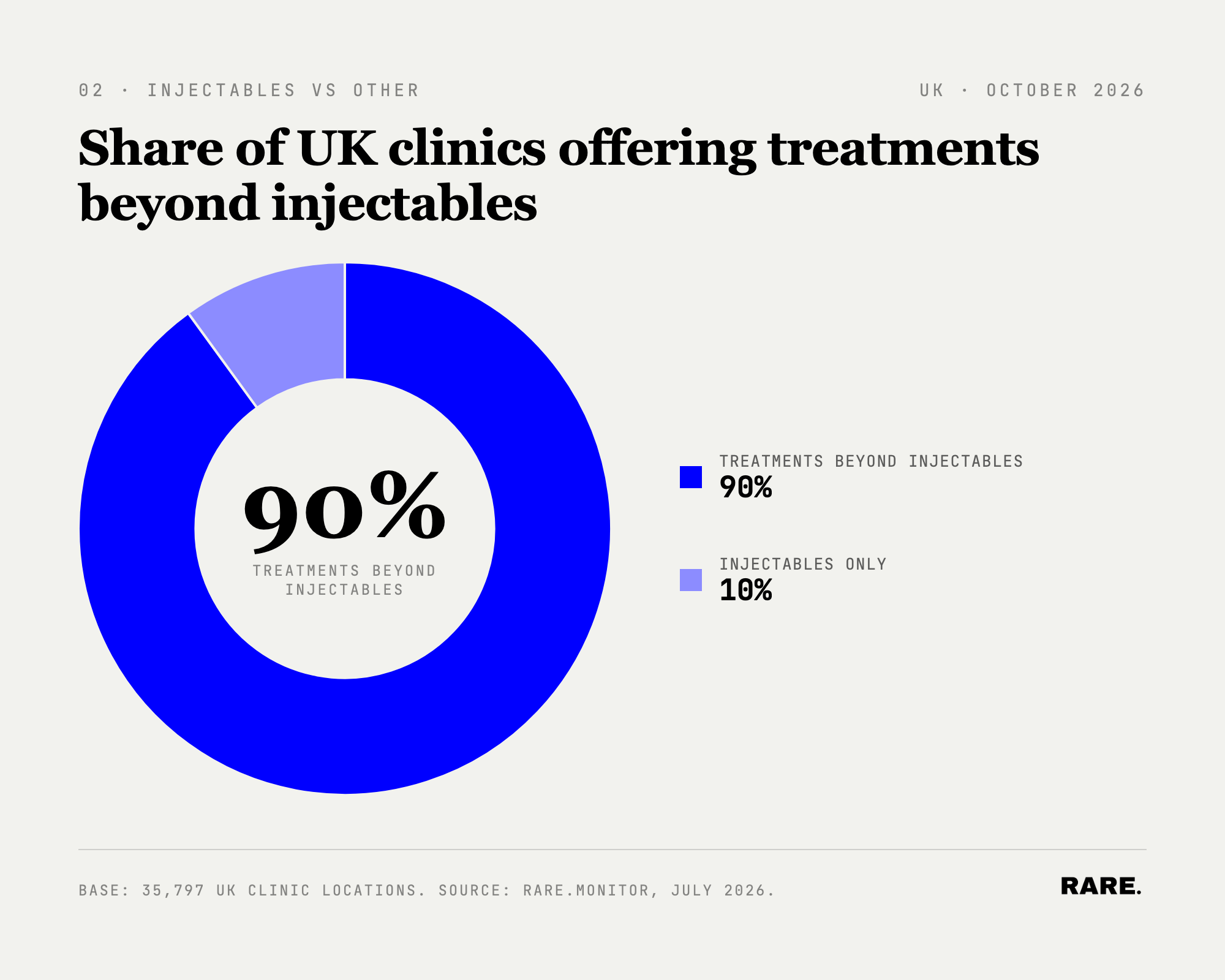
90% of UK non-surgical aesthetic clinics offer treatments beyond injectables, according to Rare.Monitor data from July 2026. Their range spans regenerative treatments, energy-based devices, hair procedures, medical wellness and weight management. Breadth, not specialisation, is now the norm.
That finding opened our talk at CCR 2026 for the Aesthetics Journal, drawn from our contribution to the 2026 Aesthetics Trends Report. Four more trends followed. Regenerative treatments are growing but churning. Clinical medical wellness is holding firm. Weight-loss prescribing has scale but little depth of support. And patients are spending more deliberately. Each is drawn from Rare.Monitor tracking of 35,797 UK clinic locations and a survey of 53 decision-makers across clinics, manufacturers and advisors.
Confidence in the market is up, but only just
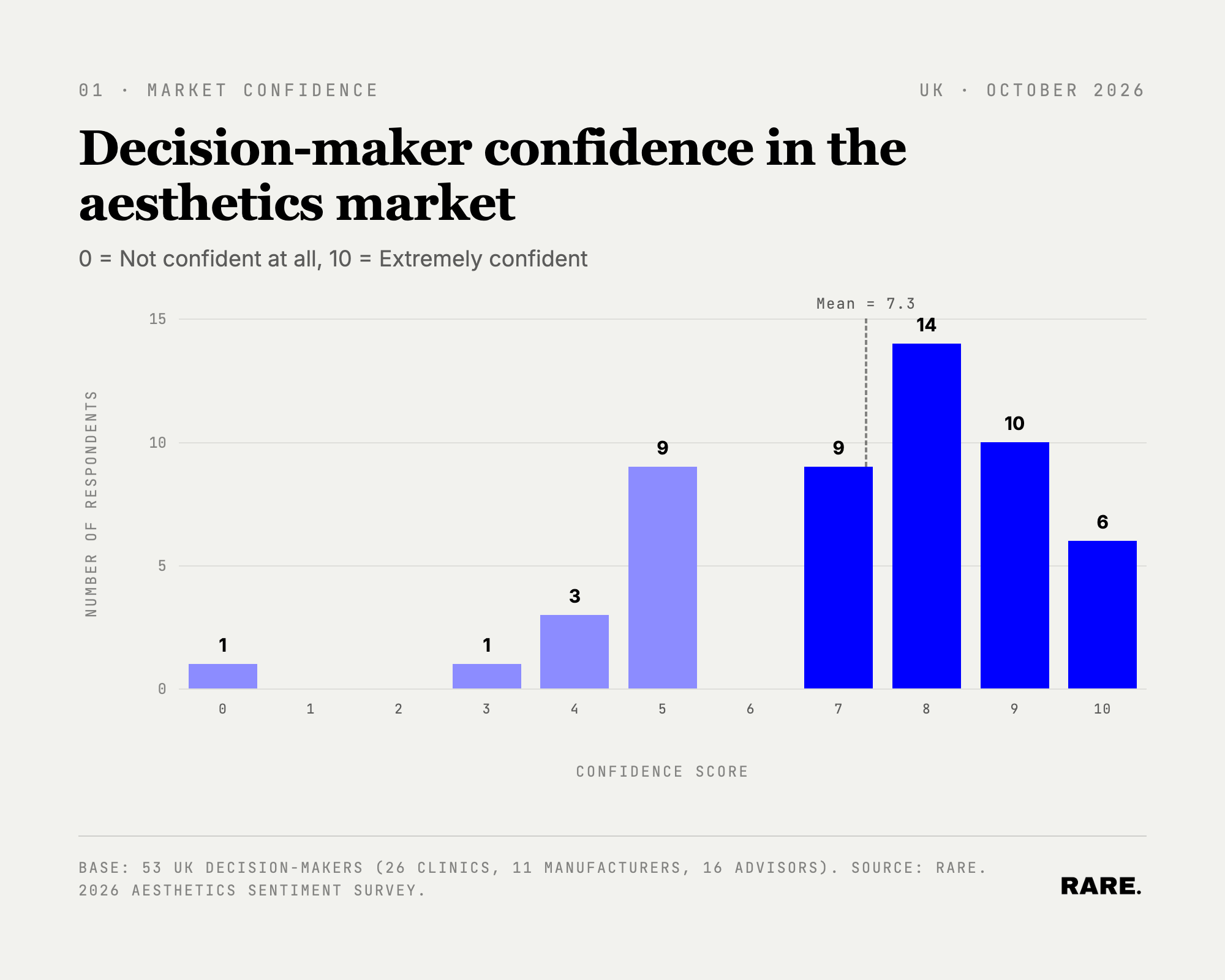
The 53 decision-makers we surveyed gave the market a mean confidence score of 7.3 out of 10, slightly up on last year. Clinics, manufacturers and advisors started far apart and now all sit around 7. The spread of answers is split rather than centred: some respondents are bullish, others are not.
The recovery since COVID has been slow, and the verbatims explain part of it. One respondent put it plainly; "my sense is it's now getting quite confusing where to go and how to specialise." The rest of the data shows why.
Rare.Monitor has tracked UK aesthetics for ten years. In July 2026, 90% of clinic locations offered treatments beyond injectables, leaving only one in ten offering injectables alone. Among clinics that do offer injectables, six in seven also offer medical skincare, energy-based devices or wellness.
The range of what sits alongside toxin and filler is wide. It runs from skin boosters and polynucleotides to laser resurfacing, body contouring, hair restoration and weight management medication. Rare.Monitor tracks more than 30 different treatment types, and most of them now appear alongside injectables somewhere in the market.
What this means: a clinic's positioning is no longer defined by its injectables. For manufacturers, the account that buys your filler is also choosing between devices, regenerative products and wellness services, all competing for the same practitioner's time.
Regenerative treatments: growing, and churning
In July 2026, 41% of UK clinic locations offered at least one regenerative treatment, up from around 38% a year earlier. Two in five clinics adopting regenerative treatments is an established trend, not a universal picture.
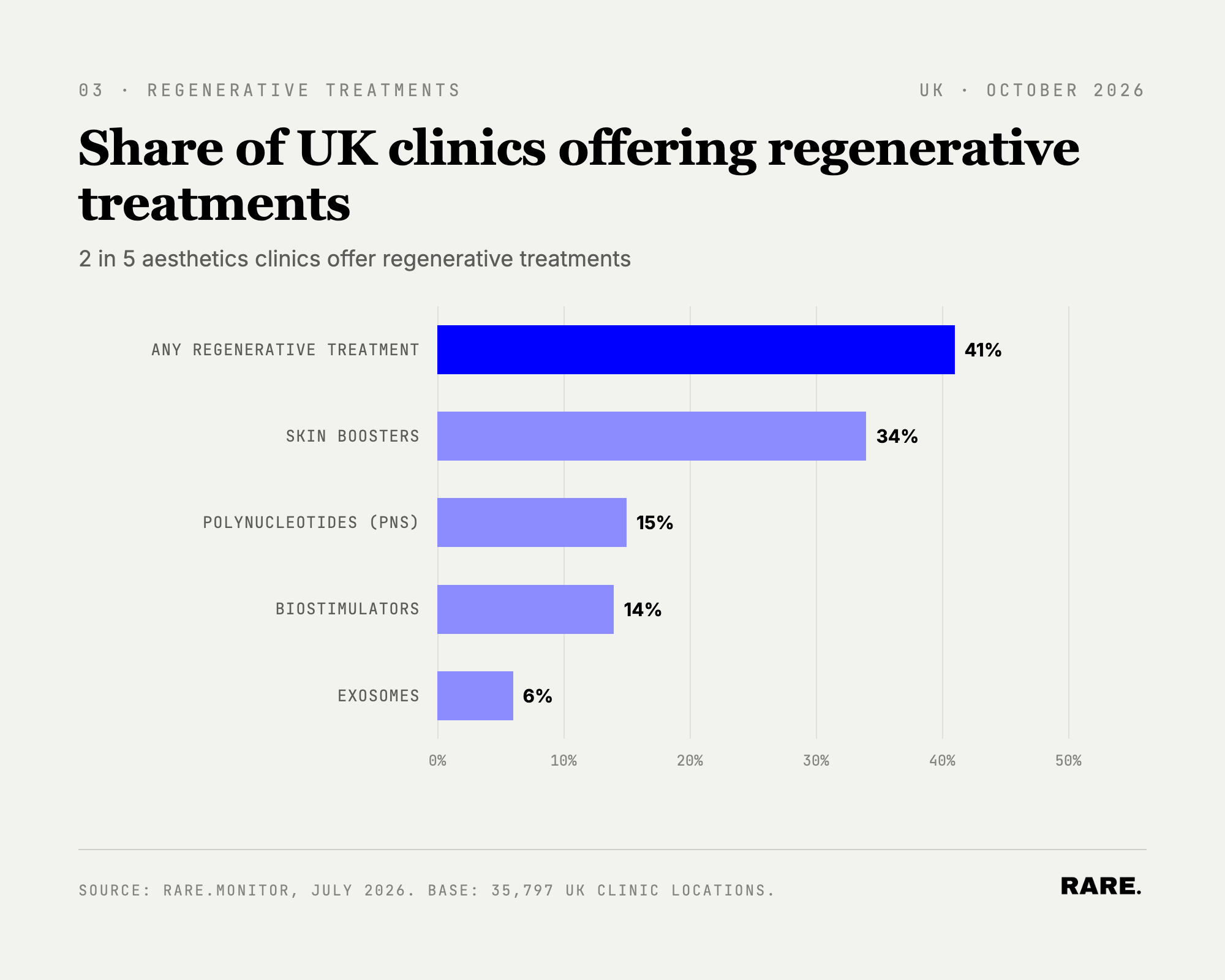
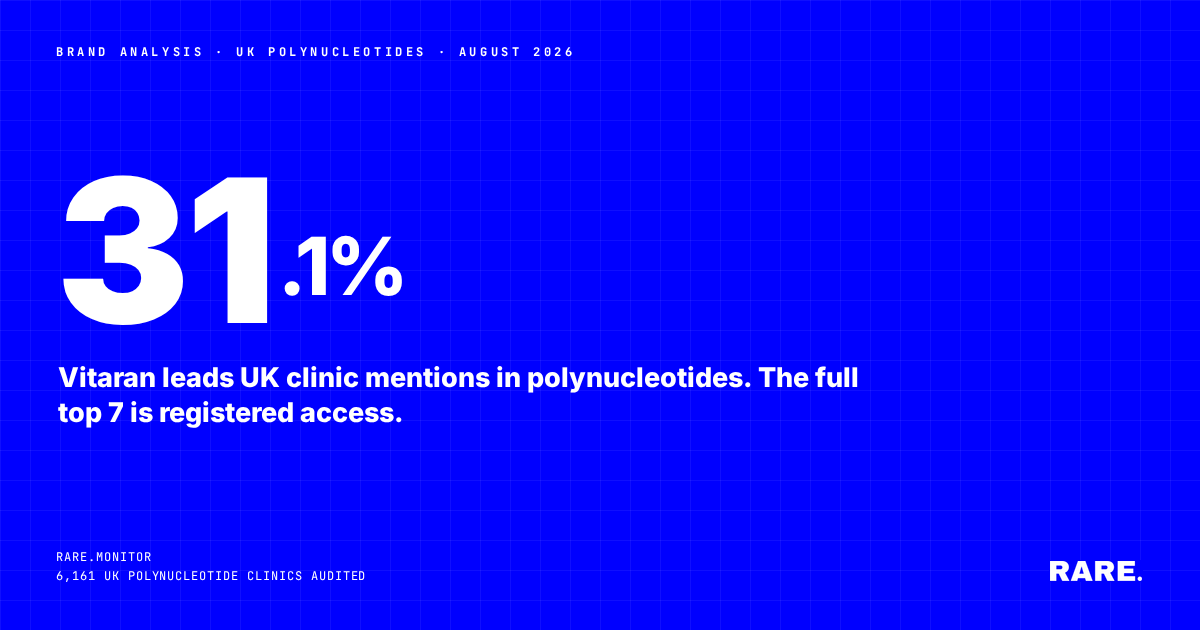
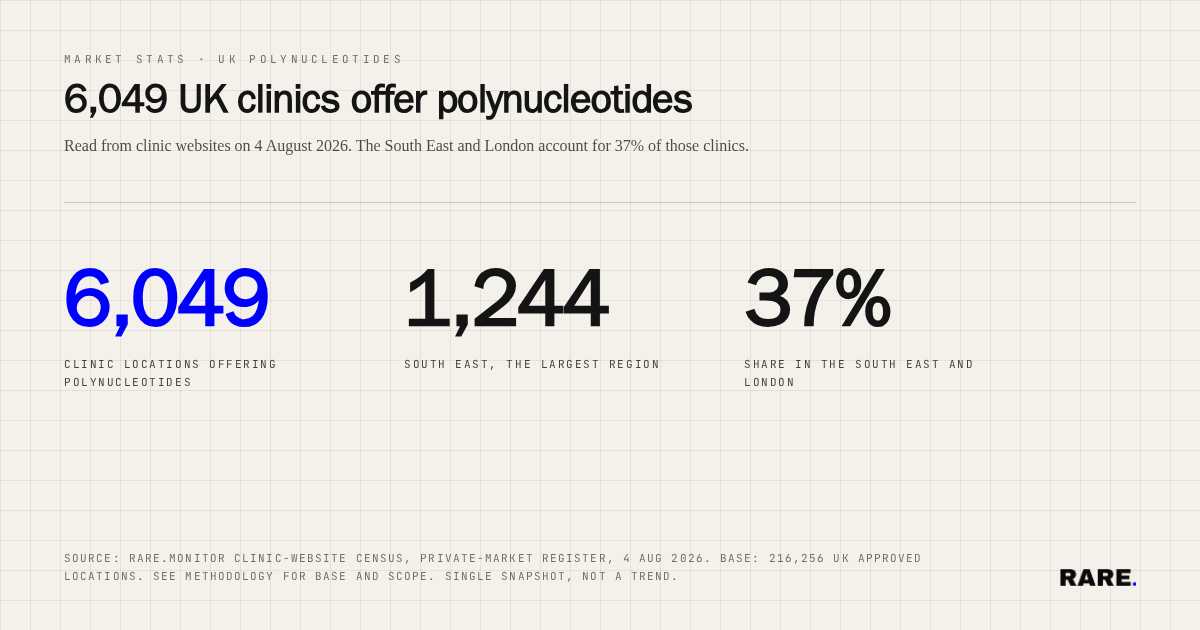
This headline hides a lot of movement. Polynucleotides (PNs) have grown from roughly 5% of clinics a few years ago, to 15% today. Yet in a year-on-year comparison of around 13,000 clinic websites, 13% of clinics removed PNs while only 8% added them. Clinics are trialling, dropping and switching treatments at pace.
Adoption is also uneven. Where medical governance is visible, 56% of clinics offer a regenerative treatment, against 32% elsewhere.
What this means: regenerative treatment growth is concentrated in clinics with visible medical oversight. Newer adoptions overstates stickiness; while growth is important, retention of the clinics already offering a treatment matters just as much.
Clinical medical wellness is not a fad
Clinical infers the involvement of a healthcare professional (HCP) assessment, prescription or intervention, not lifestyle coaching. 37% of UK clinic locations offer at least one clinical wellness or longevity treatment alongside aesthetics, in line with previous years.
The survey verbatims point the same way:
"Clients are becoming far more interested in skin health and long term maintenance, instead of a fast fix." Clinic
"Practitioners who don't diversify into longevity and wellness are getting left behind." Advisor
Nutritional counselling (13.5%) and IV vitamin therapy (13.1%) lead the category, followed by functional medicine and bioidentical hormone replacement therapy (BHRT). The 37% is steady; what sits underneath it keeps changing.
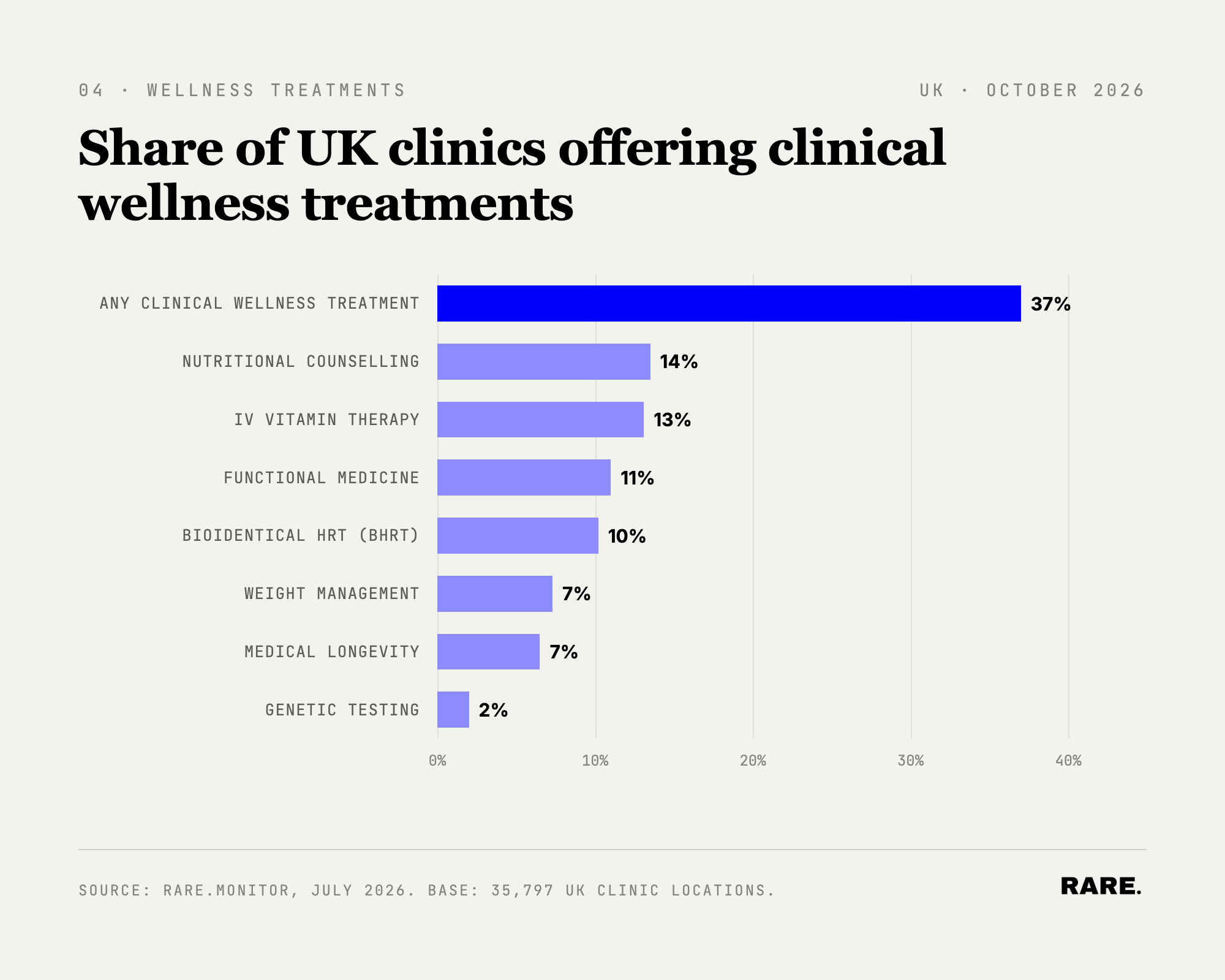
What this means: more than a third of aesthetic clinics now position themselves partly as preventative health providers. Brands in HRT, diagnostics and nutrition have a sizeable route to market through aesthetic clinics.
GLP-1: wide reach, limited support
7,323 UK non-surgical aesthetic clinic locations offered weight-loss medication in July 2026. Most of them provided the prescription but little else.
Best-practice GLP-1 care calls for three supporting services: nutritional counselling, a structured weight-management programme, and fitness or exercise prescription. 53% of these clinics advertise none of the three. Only 18% advertise all three.
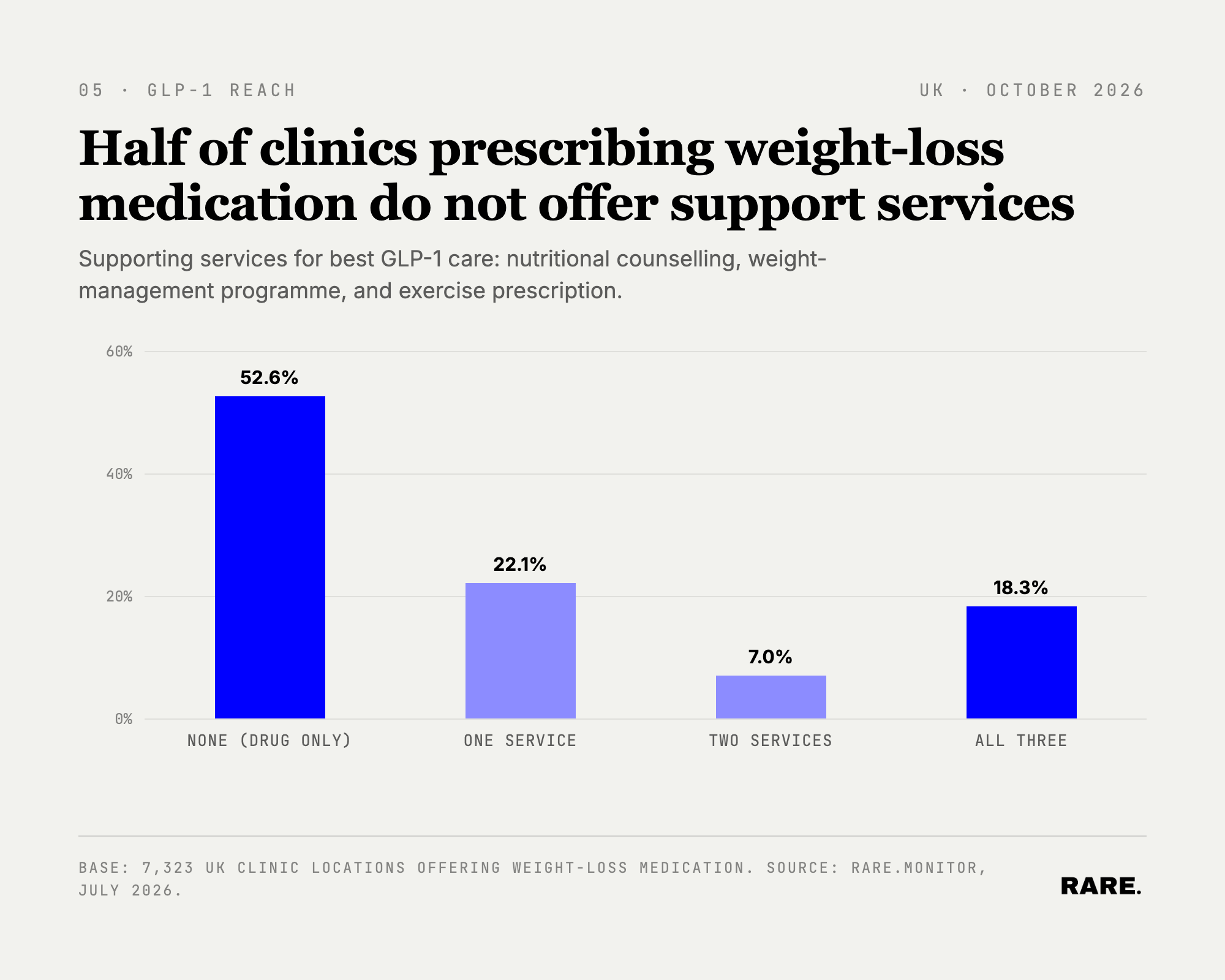
Obesity is a complex, chronic disease, and helping a patient stay on a programme is hard to do well. Specialist providers are now working with clinics to build these programmes in, but the data shows how far there is to go.
What this means: the aesthetics channel already reaches thousands of weight-loss patients. The gap is in the support around the script, and clinics that close it have a clear point of difference.
Demand is deliberated, not collapsing
36% of UK adults expect to be financially worse off in 2026, against 22% who expect to be better off, according to YouGov. A third (33%) of those expecting to be worse off plan to cut back on health and beauty.
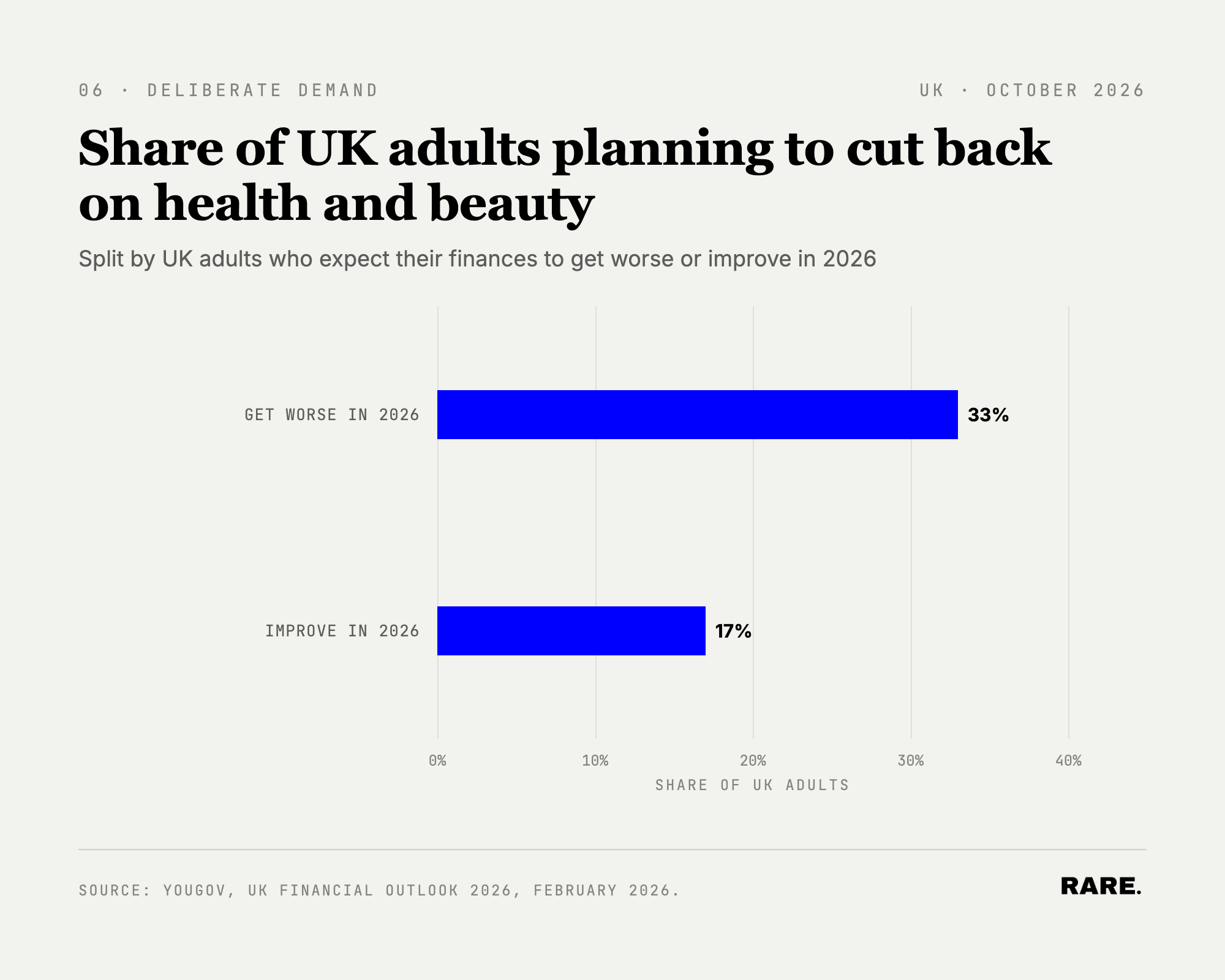
Clinics are seeing it first-hand. Patients are extending the intervals between treatments, expecting more for their money and arriving better informed. As one single-site clinic owner told us: "Clients are spending less and extending the intervals between treatments." Some respondents reported demand decreasing since last year.
The same research points to who is holding up. Clinics with a broader range of treatments, and a more joined-up approach to each patient's care, are doing better. We will quantify that in more depth over the coming months.
What this means: patients are not leaving the market, they are choosing more carefully. Clinics that make value and results obvious win the visit.
Breadth first, depth next
The UK aesthetics market has already broadened. Injectables sit alongside regenerative treatments in two of every five clinics, clinical wellness in more than a third, and weight-loss prescribing in over 7,000 locations. Survey respondents tie that breadth to their caution: with so many ways to build a clinic, the choice of what to be has become harder.
The next phase is about depth. Offering a treatment is now easy to do and easy to undo, as the polynucleotide churn shows. Doing it well is not so easy. The clinics pulling ahead are the ones that support a patient across a whole course of care, whether that is a regenerative programme or a GLP-1 prescription, and the brands that help them do it will hold their accounts longest.
Methodology: Clinic data comes from Rare.Monitor, covering 35,797 UK non-surgical aesthetic clinic locations in July 2026, classified by advertised treatments. Polynucleotide churn is based on a year-on-year comparison of a random sample of around 13,000 clinic websites. Sentiment data comes from the Rare. 2026 Aesthetics Sentiment Survey of 53 UK decision-makers (26 clinics, 11 manufacturers, 16 advisors). Consumer figures are from YouGov, February 2026. These findings were first presented at CCR 2026 for the Aesthetics Journal and feature in the 2026 Aesthetics Trends Report.