
Yellow fever, a mosquito-borne viral disease, poses a significant health risk, particularly for travellers visiting endemic regions.
UK men are nearly twice as likely as UK women to plan a yellow fever vaccination in the next 12 months, with 30% of men intending vaccination against 17% of women, according to Rare. research. 78% of UK adults intending yellow fever vaccination are doing so for travel purposes. Despite the WHOs deprecation of the yellow fever booster, only 29% of vaccinated UK adults are aware of the updated guidance, suggesting that public-health communication on changing recommendations is reaching a minority of the affected population.
What drives UK yellow fever vaccination intent?
Yellow fever vaccination intent in the UK is overwhelmingly travel-driven. 78% of UK adults planning to receive the yellow fever vaccine cite travel as the primary reason. Only a small minority intend vaccination for non-travel reasons.
That distribution makes UK yellow fever uptake closely tied to UK outbound travel patterns. Endemic regions are concentrated in tropical Africa, South America and parts of the Caribbean. UK travellers booking trips to these regions are the addressable cohort for yellow fever messaging, and travel agents, airlines and travel clinics all sit closer to the booking moment than HCPs do in standard primary care.
Why is there a gender gap in yellow fever vaccination intent?
UK gender disparity in yellow fever vaccination intent is significant. 30% of UK men plan to be vaccinated against yellow fever in the next 12 months, against only 17% of UK women.
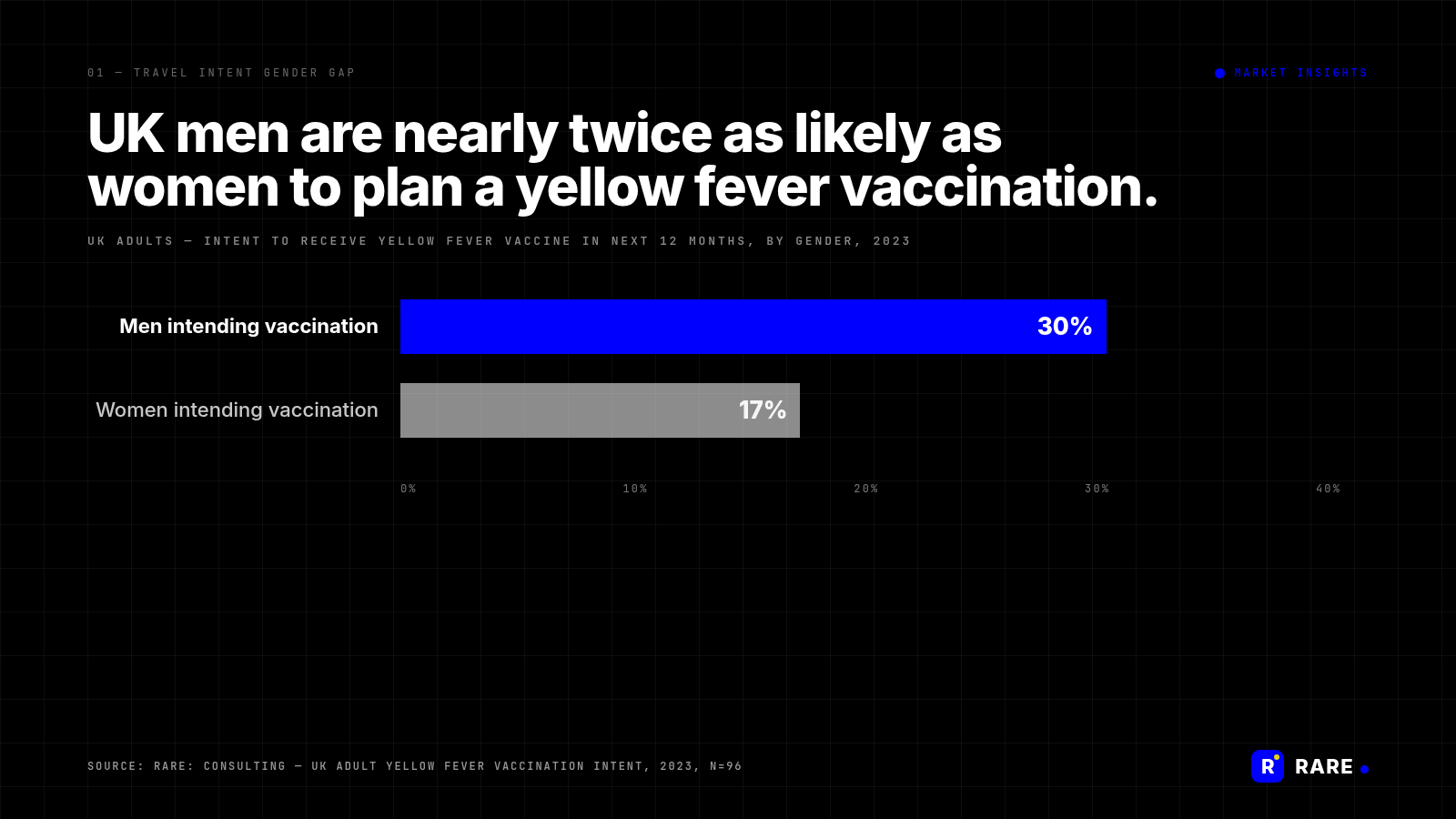
That gap is large enough to warrant targeted commercial and public health attention. Closing it requires educational outreach calibrated for UK women travellers, including campaign content that addresses any gender-specific concerns or barriers women report. Travel insurance providers and travel-specific publications, often consumed at higher rates by women trip-planners, are useful distribution channels for awareness content.
How well is updated yellow fever guidance reaching the UK?
The WHO recently deprecated the yellow fever booster requirement, meaning a single vaccination is now considered to provide lifelong protection in most cases. However, only 29% of UK adults vaccinated against yellow fever are aware of this change.
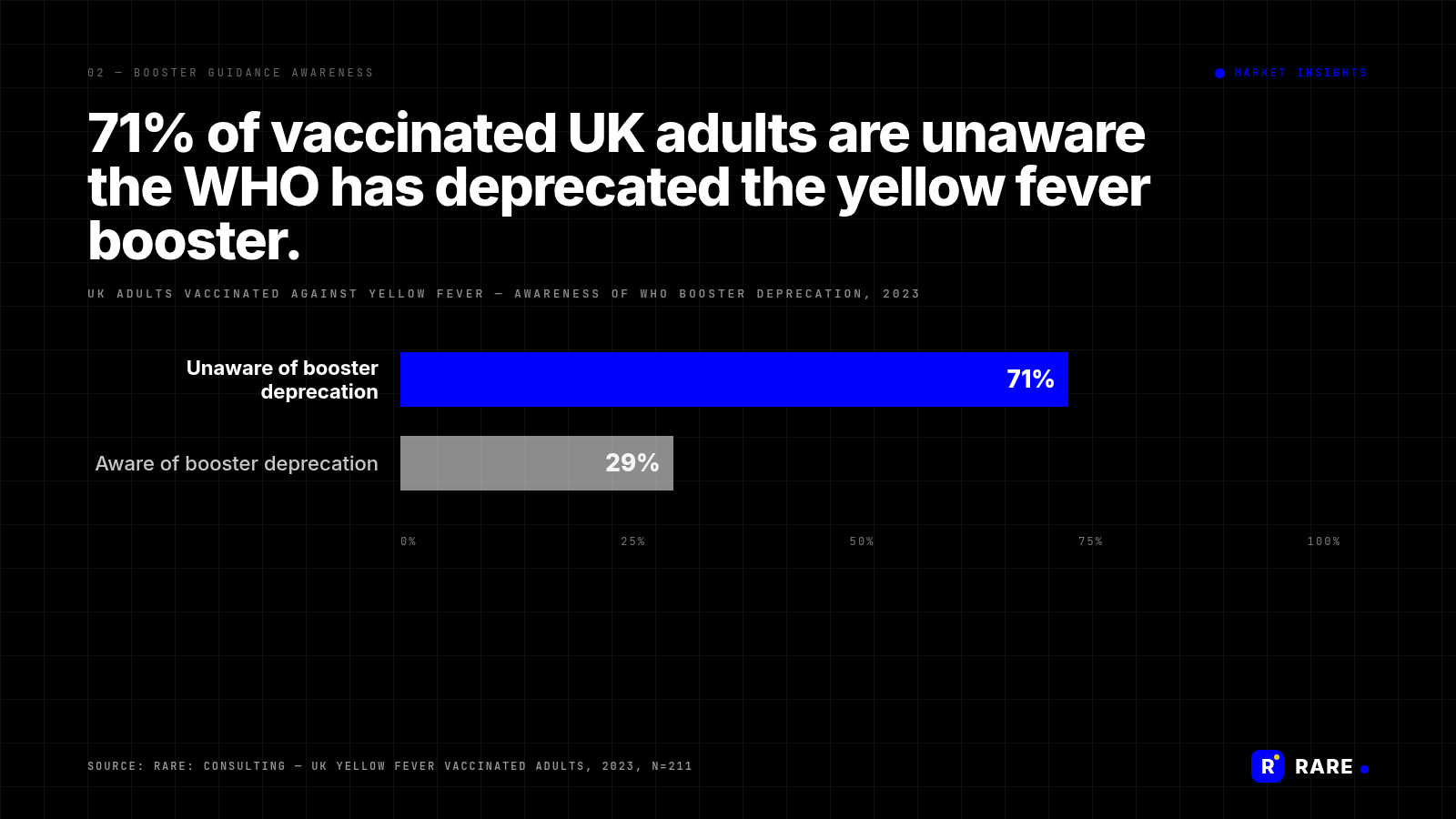
That 71% awareness gap is a structural communication problem. Vaccinated UK adults are returning for unnecessary boosters, healthcare professionals may continue to recommend boosters where they are no longer indicated, and the cost of unnecessary booster doses is being borne by UK consumers when it does not need to be. Travel clinics, healthcare providers and public health agencies need to actively communicate the updated WHO guidance to UK adults travelling to yellow-fever-endemic regions.
The 71% awareness gap on the WHO booster deprecation is the operationally significant finding. The booster is no longer required for most travellers, but seven in ten UK adults already vaccinated do not know that. Healthcare providers may continue recommending boosters that are not indicated. UK consumers may continue funding doses that have no clinical benefit. Public health agencies have a clear remit to communicate the change, and the data shows that communication has not yet reached the cohort it most affects.
For UK travel clinics, the gap is also a credibility issue. Clinics that proactively communicate the WHO update to returning patients, and stop recommending unnecessary boosters, distinguish themselves clinically from those that continue with the older protocol.