
Introduction: Human papillomavirus (HPV) is a prevalent sexually transmitted infection associated with various health complications, including cervical cancer and other cancers.
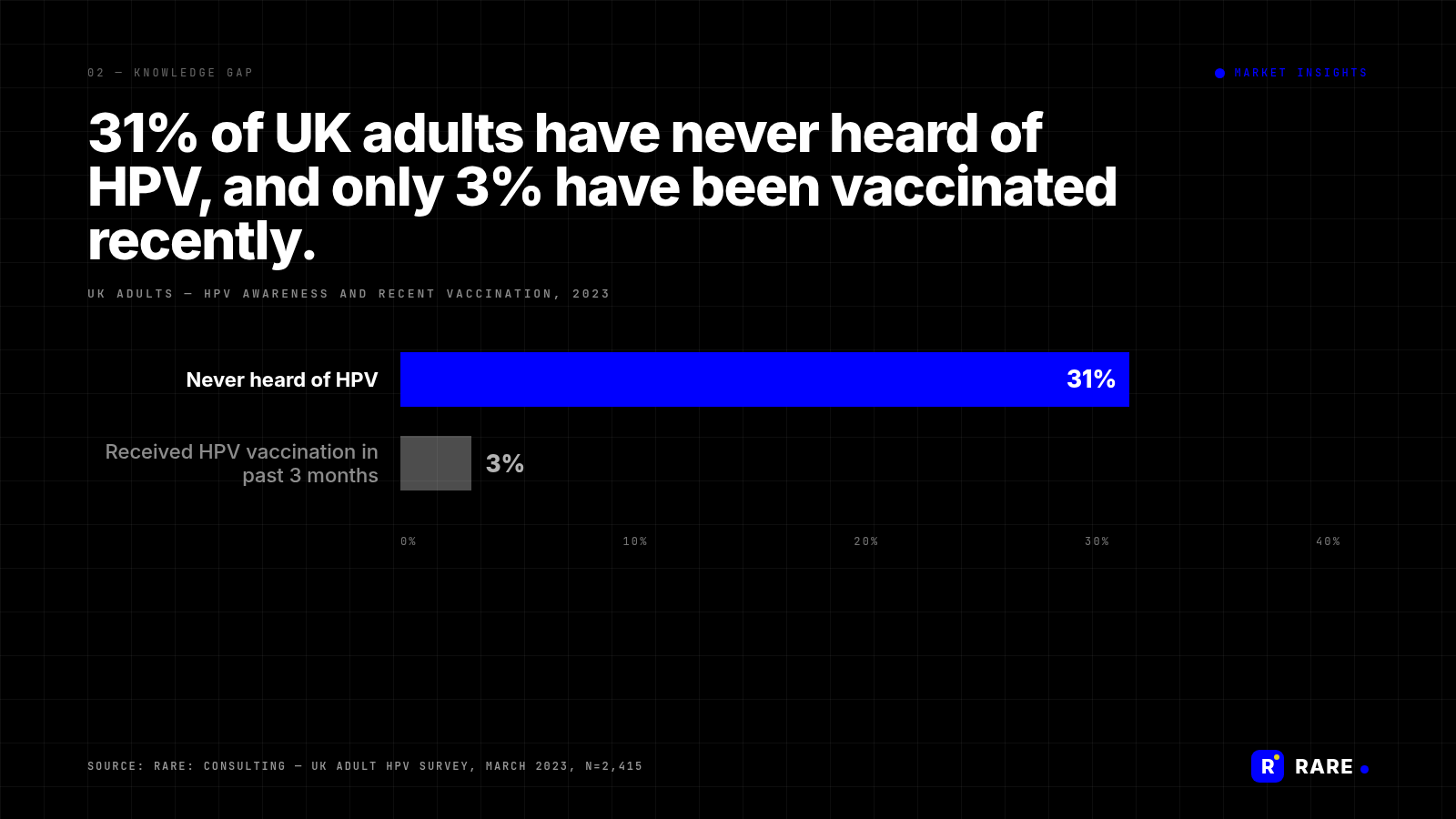
31% of UK adults have never heard of HPV, and HPV awareness shows a sharp gender gap with 52% of UK women aware of the virus against only 36% of UK men, according to Rare. research from March 2023. Vaccination uptake remains low at just 3% of UK adults vaccinated in the past three months. HPV-related diseases, including cervical cancer and other cancers, are preventable, but the awareness and vaccination gaps in the UK adult population are wide enough to warrant coordinated public-health attention.
How aware are UK adults of HPV?
31% of UK adults have never heard of HPV. The number is striking given the disease is one of the most prevalent sexually transmitted infections in the UK and is associated with multiple cancers, including cervical, anal, oropharyngeal and penile cancer.
Closing the awareness gap requires coordinated educational campaigns from public health stakeholders. Schools-based education has historically focused on cervical cancer awareness in girls, but the broader HPV cancer profile affects men and women, and adult awareness needs to be supported across both sexes well beyond school age.
What gender gap exists in HPV awareness?
The HPV awareness gap between UK men and women is one of the widest gender splits in the Rare. vaccination tracker. 52% of UK women are aware of HPV, against only 36% of UK men.
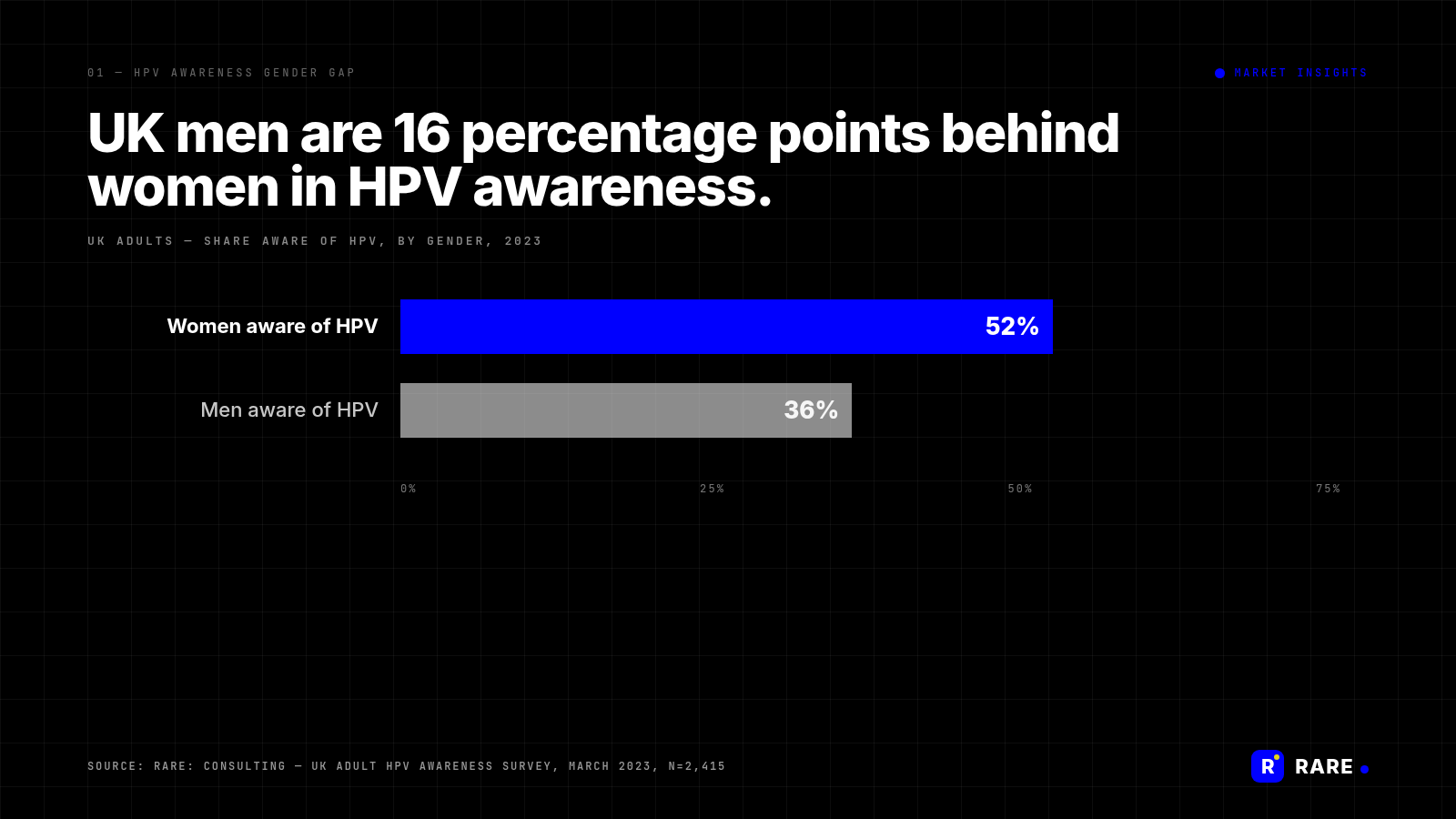
The gap reflects the historic UK NHS HPV vaccination programme, which ran for girls before being extended to boys in 2019. UK women have therefore been exposed to HPV-related public-health messaging for longer than UK men. Targeted educational campaigns aimed at UK men, including content covering male-specific HPV cancer risks, are needed to close that 16-percentage-point gap.
How widely have UK adults been vaccinated?
Only 3% of UK adults received HPV vaccination in the past three months. The number reflects both UK adults outside the schools-based programme age window and a wider cohort who are eligible for catch-up vaccination but have not been reached by current public-health communication.
The 16-point gender gap in HPV awareness, 52% of UK women aware versus 36% of men, is the legacy of how the UK NHS HPV programme was structured. Girls were vaccinated through schools from 2008. Boys were not added until 2019. UK women have therefore lived with HPV-as-a-known-condition for over a decade longer than UK men have. The gap will narrow as the male school cohort ages into adulthood, but slowly, and not without targeted attention.
Closing it earlier requires explicit male-targeted education that addresses the cancers HPV is associated with in men, oropharyngeal, anal and penile, none of which are part of the female HPV narrative the UK has built over the last fifteen years. The 31% of UK adults who have never heard of HPV at all is a separate problem, and a larger one. Both gaps are structural rather than ideological, which means they respond to communication investment more reliably than vaccine-hesitancy gaps do.