
People receiving treatment through private healthcare isn’t a new concept to the UK but it is starting to grow in popularity, as more people start to find new ways to take their health into their own hands.
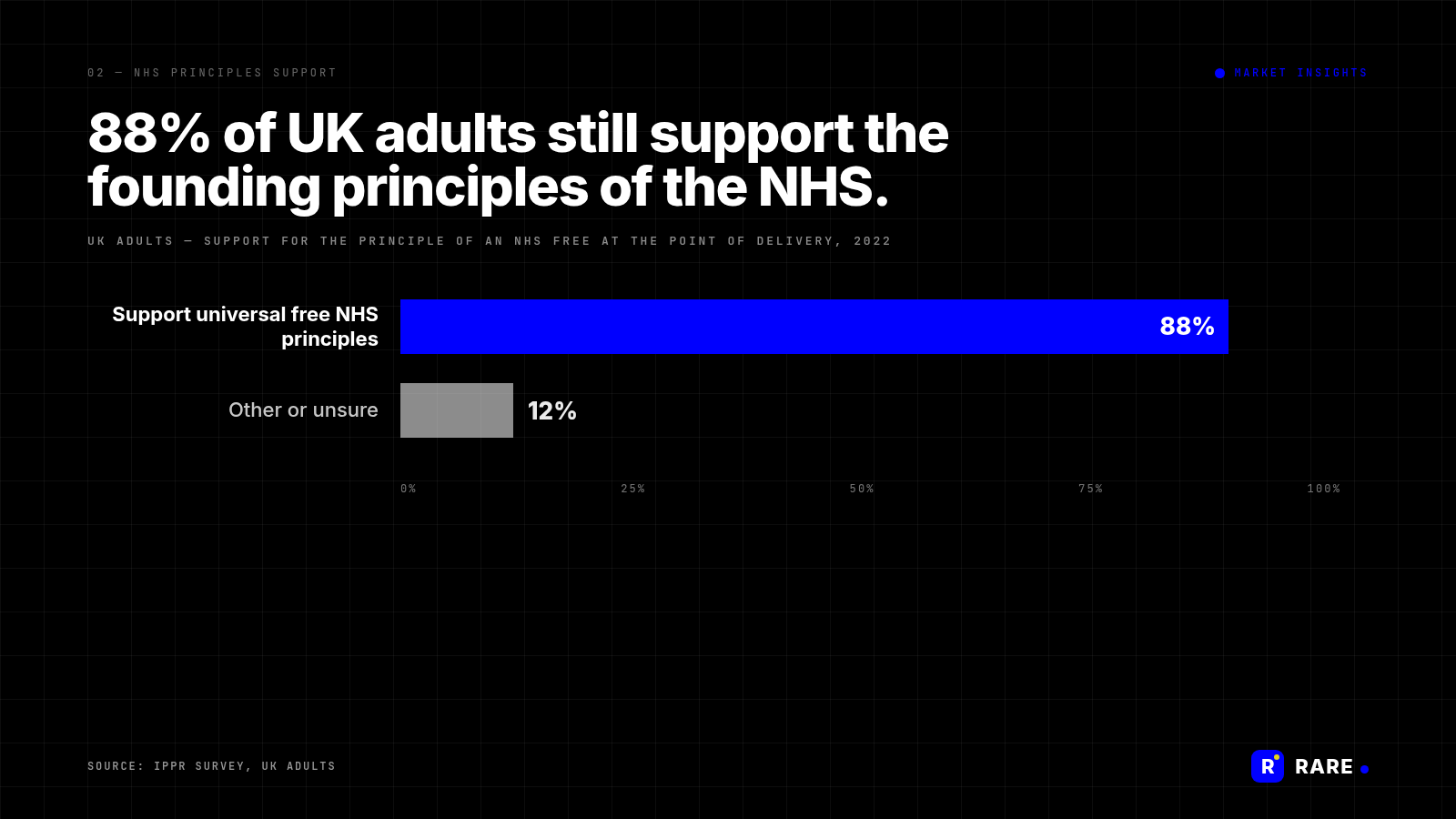
10% of UK adults have used private healthcare in the past 12 months, and 63% of those did so because of NHS delays, according to an Engage Britain survey reported in The Guardian. At the same time, 88% of UK adults still actively support the founding principles of the NHS. UK consumer perception of private healthcare is therefore a balancing act, growing private uptake driven by NHS pressure, alongside enduring public commitment to the NHS itself.
Why are UK consumers turning to private healthcare?
UK consumer migration to private healthcare is being driven by NHS access pressure, not by ideological shift. 10% of UK adults turned to private healthcare in the past 12 months. Of those, 63% did so because of NHS delays.
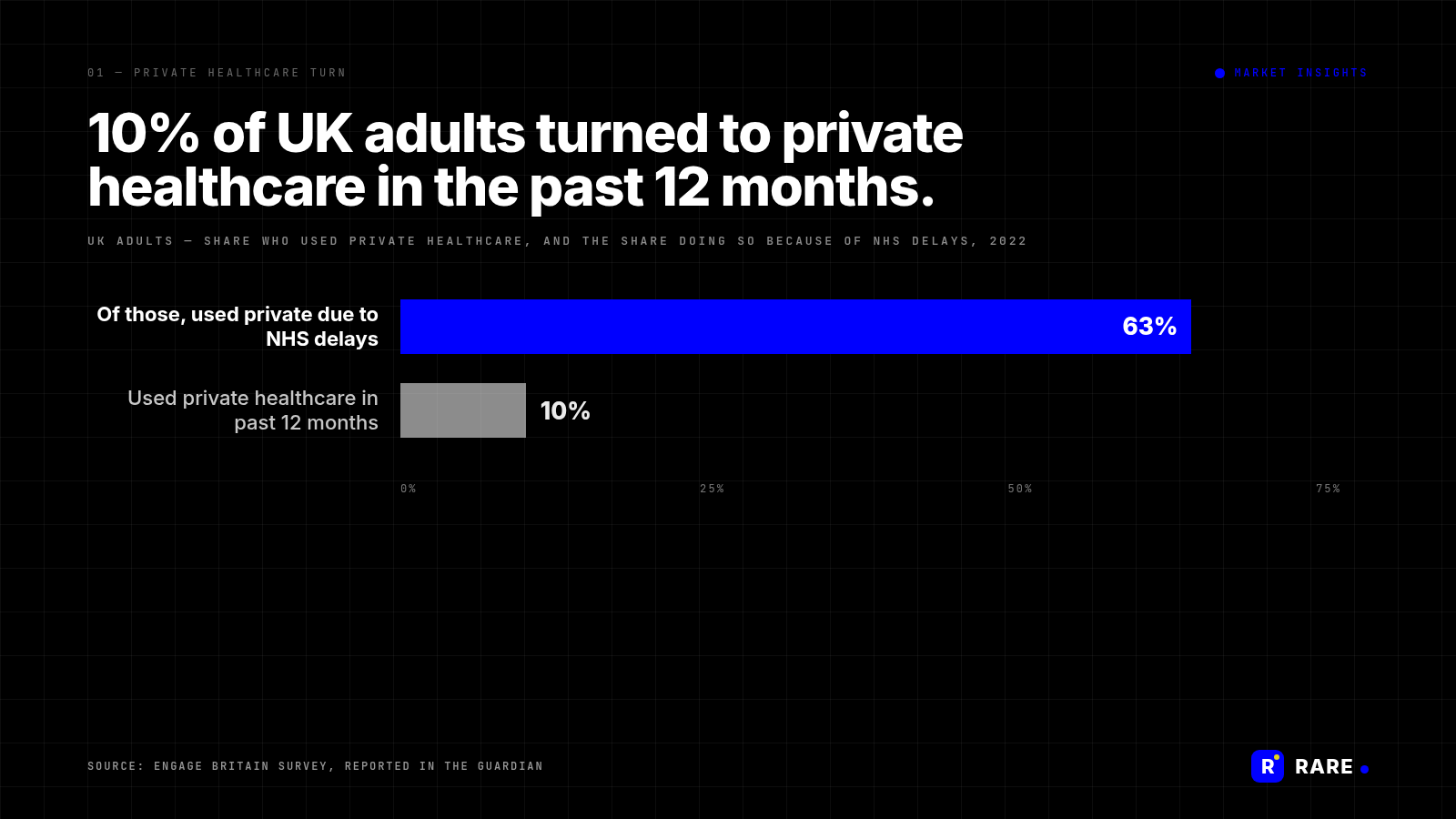
That 63% number is the cleanest signal of the underlying consumer behaviour. UK consumers are choosing private healthcare not because they prefer the model, but because they want timely access to treatment. The framing matters because it shapes how private providers should position their services. Speed-to-treatment messaging converts. Quality-of-care or premium-experience messaging is much less effective when the underlying consumer motivation is access not preference.
What does the UK still believe about the NHS?
Despite the rise in private healthcare uptake, public support for the NHS remains very high. 88% of UK adults support the principle of an NHS that is free at the point of delivery, according to IPPR research.
Generation matters. Older UK adults are more likely to have used private healthcare in the past 12 months than younger adults, partly reflecting affordability and partly reflecting greater historical comfort with the model. Younger UK consumers, while more likely to consider self-pay since COVID-19, are also more likely to retain NHS loyalty as a baseline.
Is UK healthcare becoming two-tiered?
As private healthcare uptake grows, the question of whether UK healthcare is becoming structurally two-tiered, with faster access for those who can afford it and longer waits for those who cannot, is increasingly difficult to ignore. The risk is real, and it is exacerbated by the upfront-payment barriers that put private treatment out of reach for many UK consumers regardless of treatment urgency.
Until NHS capacity catches up with demand, the two-tier risk will persist. Private providers that build accessible payment options, financing models and transparent total-cost frameworks help close the gap. Those that maintain premium-only commercial models risk widening it.
The data describes a contradiction the UK consumer is willing to live with, and most private healthcare brands are not. People who used private healthcare in the past twelve months still back NHS principles by a wide margin. They are not making an ideological switch, they are making a practical one. The marketing implication is uncomfortable for premium-positioned brands: the consumer still believes the NHS gets the principle right, they just need it to happen faster. The brands that lead this category in the next five years will not be the ones that out-premium each other. They will be the ones that read the contradiction and position themselves as a way to support a system the consumer still believes in, not displace it.