
With the rise of globalisation, travelling has become more accessible and affordable than ever before, allowing people to explore new cultures, cuisines and landscapes. However, despite the growing number of UK residents travelling abroad each year, there seems to be a lack of awareness about the importance of travel vaccines and the diseases they protect us from.
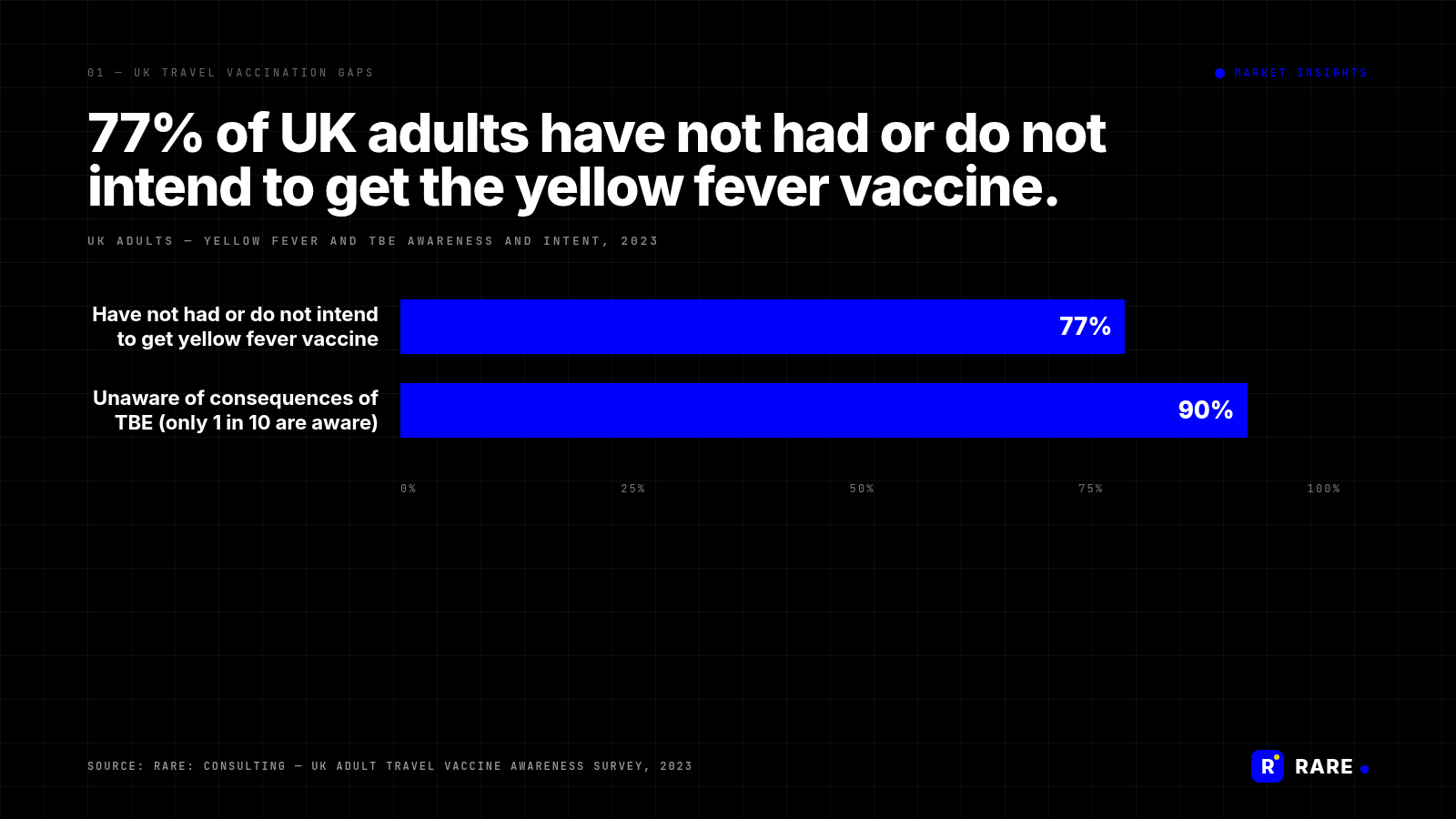
77% of the UK population have not had or do not intend to get the yellow fever vaccine, and only 1 in 10 UK adults are aware of the consequences of tick-borne encephalitis (TBE), according to Rare. research. UK travel vaccine uptake is held back by a structural awareness gap, made worse by cost barriers and an information environment in which 16% of UK adults intending vaccination consider social media a credible source.
What disease awareness gaps does the UK travel population have?
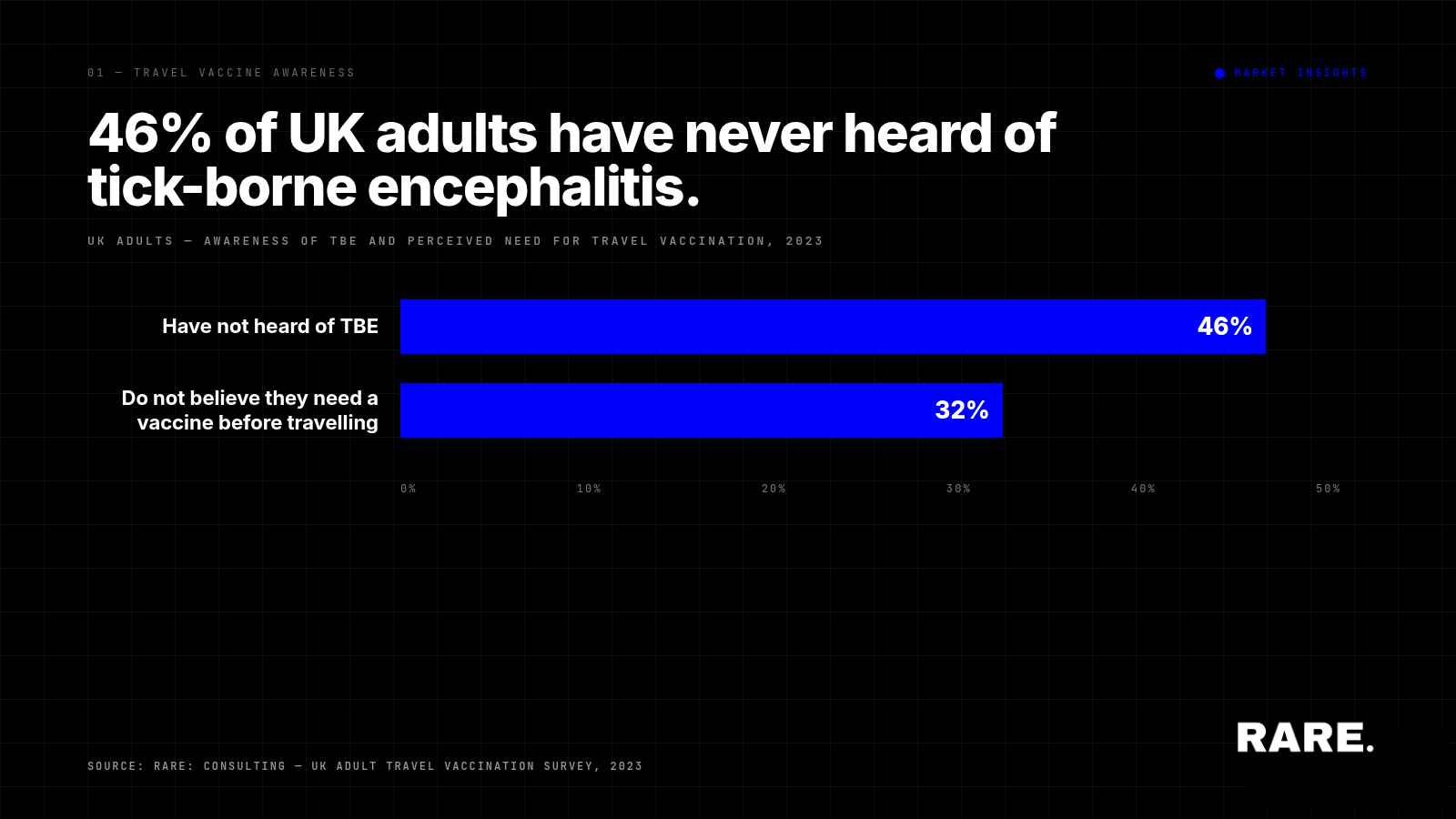
The yellow fever data set is partly explained by destination, since the disease is concentrated in tropical Africa, South America and parts of the Caribbean, which sit outside the typical UK travel itinerary. The TBE finding is harder to explain. TBE is endemic in popular tourist destinations including Austria, Germany and Switzerland, yet only 1 in 10 UK adults are aware of its consequences. The country-skew of UK leisure travel makes that gap a meaningful public health concern.
UK consumers also under-recognise risk inside developed countries. Lyme disease cases in the UK have been rising over recent years, but consumer awareness of tick-borne illness remains low across both UK domestic travel and European travel.
Why are UK adults not getting vaccinated before travelling?
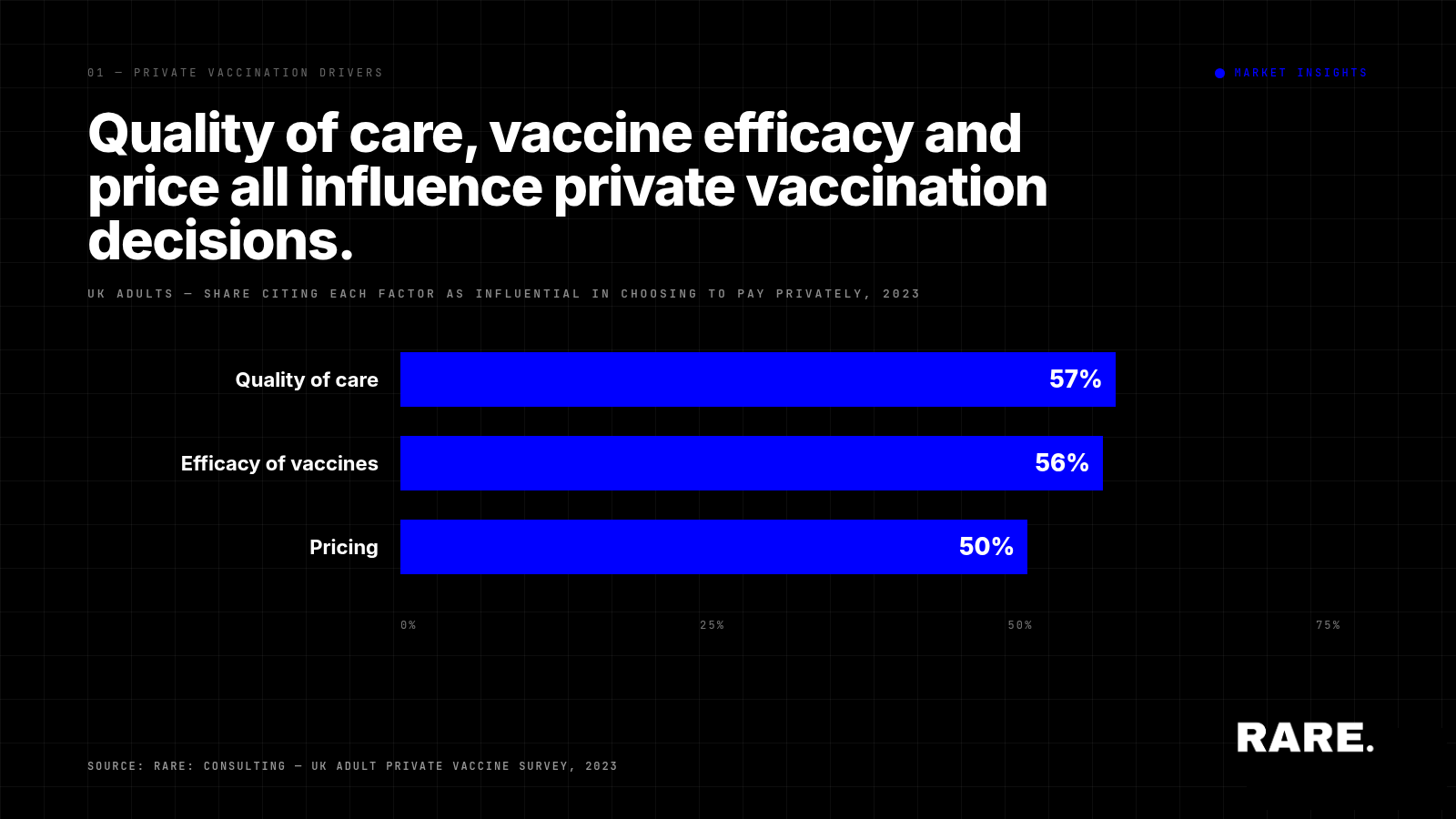
Three barriers dominate. The first is the awareness gap above, where UK consumers simply do not know they should be vaccinated. The second is cost. Some travel vaccines are free on the NHS, others are not, and the cost of paid vaccinations adds to a holiday budget that consumers may already be stretching.
The third is information quality. Misinformation about vaccine safety and efficacy is widely accessible through online channels, and 16% of UK adults intending travel vaccination consider social media a credible source for information about vaccines.
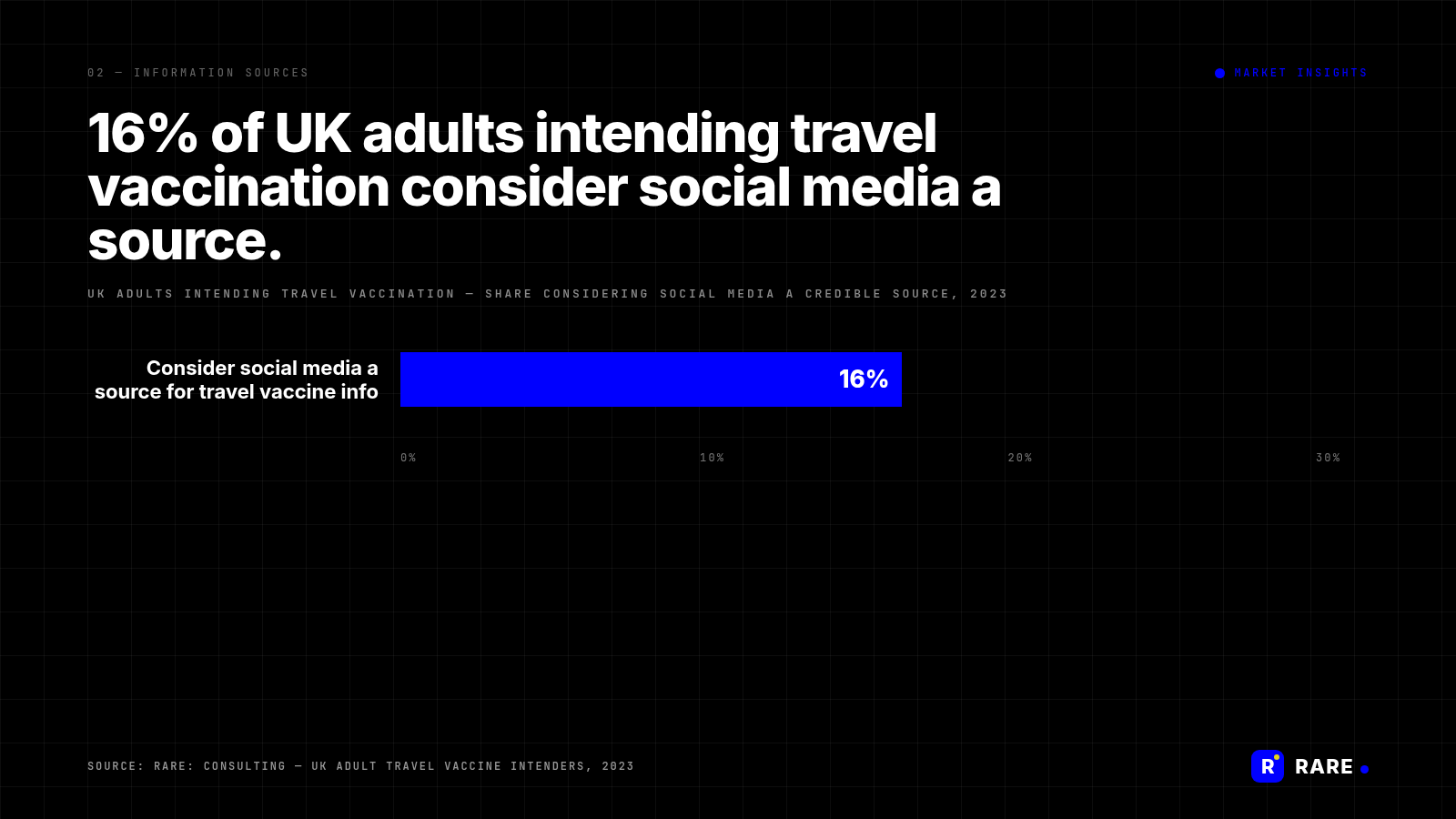
That 16% number matters because social media is structurally weaker than NHS or government channels at delivering accurate, timely vaccine information, particularly when individual users distrust official sources. The healthcare community has limited capacity to compete for attention in those channels, and that imbalance shapes which information consumers see most often.
The 90% TBE awareness gap is the most actionable finding here. Tick-borne encephalitis is endemic in popular UK travel destinations, and only one in ten UK adults knows the consequences. The gap is wide enough that it sits outside normal information dynamics. Routine NHS guidance, GP-led patient education and travel-clinic touchpoints are not closing it.
For manufacturers, distributors and travel-clinic operators, the practical question is whether to invest in disease-specific consumer education or to rely on the wider travel-medicine narrative. The 90% gap suggests disease-specific education compounds faster, and the channel where it lands best is the travel agent or airline pre-departure window, not the GP appointment a fortnight before the trip.