
Introduction: Shingles is caused by the varicella-zoster virus and poses a significant health risk to those infected, necessitating effective prevention strategies.
43% of UK shingles vaccinations are administered through the NHS, with 25% delivered through private clinics or hospitals and 20% through workplace vaccination schemes, according to Rare. research. The remaining 12% sit across other channels. Shingles vaccination uptake remains low overall, with only 6% of UK adults intending to be vaccinated in the next three months, and a sharp generational gap in awareness suggests that public-health messaging is not reaching younger UK adults effectively.
Where do UK adults receive shingles vaccinations?
Shingles vaccination delivery in the UK splits across four channels. The NHS administers 43% of all UK shingles vaccinations, the largest share. Private clinics and hospitals deliver 25%. Workplace vaccination schemes deliver 20%. The remaining 12% are administered through other channels including pharmacy and travel-clinic settings.
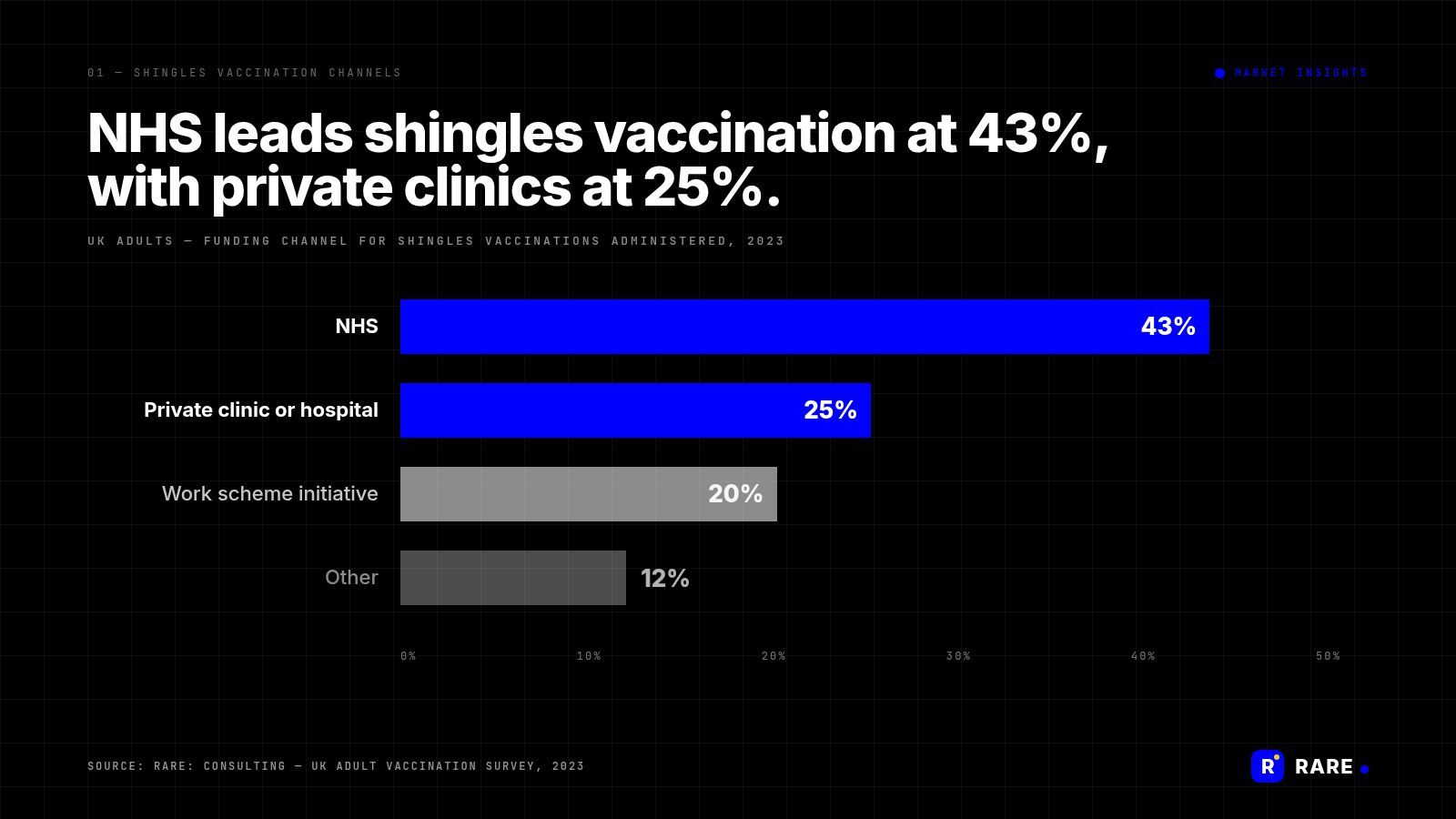
The split highlights how important non-NHS channels already are to UK shingles prevention. Workplace schemes, in particular, deliver one in five UK shingles vaccinations, suggesting that employer-sponsored vaccination is a meaningful part of the UK adult vaccination ecosystem. For manufacturers and operators looking to expand shingles coverage, expanding workplace partnerships is a faster route than scaling private clinic capacity alone.
How widely do UK adults intend to get vaccinated?
Despite the multi-channel delivery infrastructure, shingles vaccination intent in the UK remains low. Only 6% of UK adults express intent to receive the shingles vaccine in the next three months. Given the clinical impact of shingles, particularly in older adults and those with weakened immune systems, the low intent rate suggests significant unmet protection in the UK adult population.
How does shingles awareness vary by age?
Awareness of shingles is sharply skewed by age. 75% of UK adults aged 51 to 76 are aware of the condition, against only 50% of UK adults aged 16 to 24.
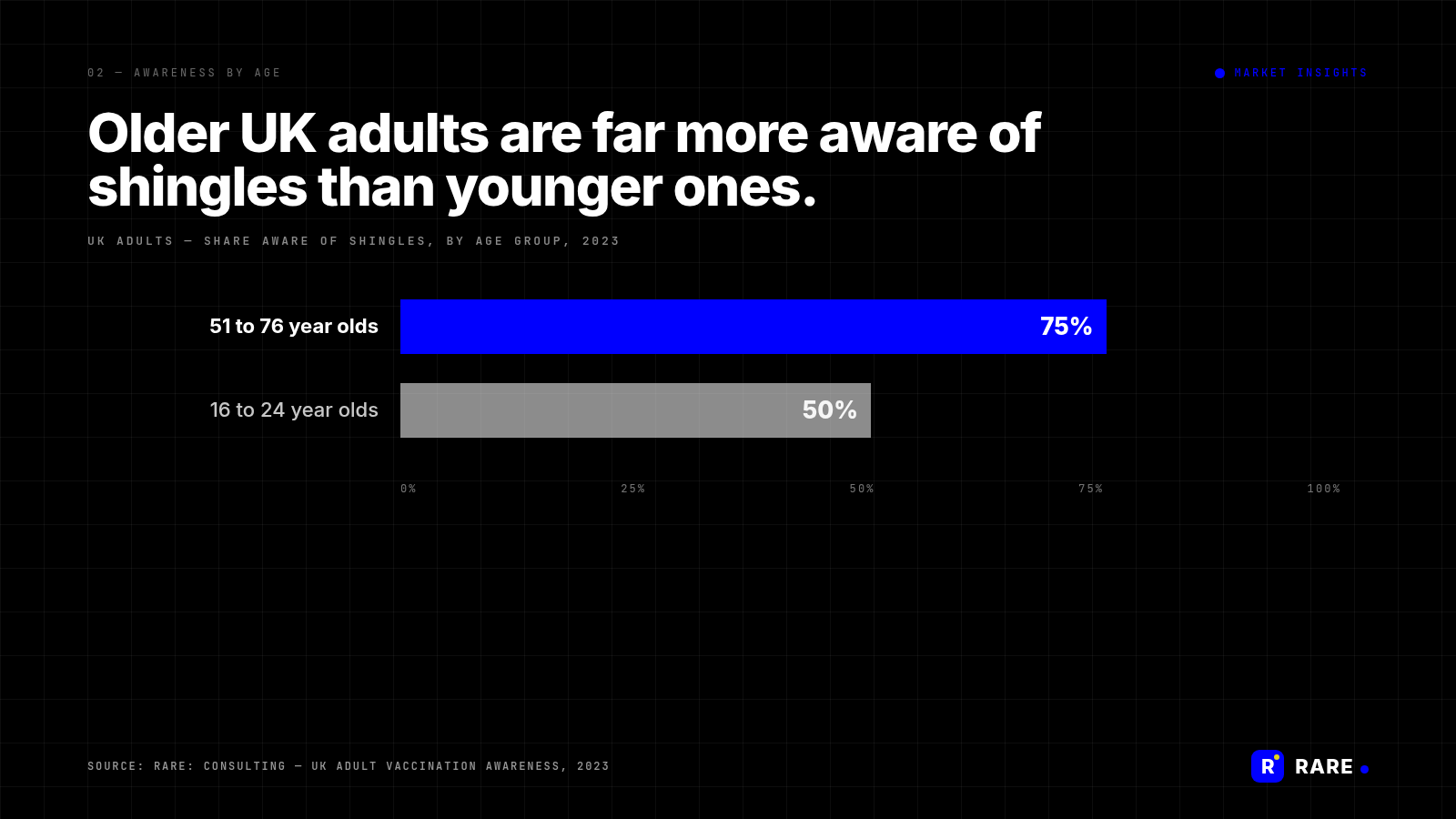
That generational gap signals that current shingles awareness messaging is reaching older audiences far more effectively than younger ones. Bridging the gap requires tailored educational campaigns through channels that younger UK adults already use, including social media, community outreach programmes and peer-led education. Younger UK adults also act as caregivers for older relatives who may benefit from shingles vaccination, so closing the awareness gap has a multiplier effect.
Twenty percent of UK shingles vaccinations being delivered through workplace schemes is the under-discussed channel in this analysis. It is not pharmacy. It is not private GP. It is the employer-sponsored programme. That share is large enough to redraw what UK shingles vaccination strategy should look like.
For manufacturers and distributors, the workplace channel is structurally easier to scale than direct-to-consumer. Buying decisions sit with HR and employee benefits teams, not the consumer. The clinical case for offering shingles vaccination as part of an employee benefits package, given the productivity cost of a shingles episode, is straightforward to make. The category-leader brands that build dedicated employer-sales propositions will absorb a disproportionate share of UK shingles vaccination volume over the next three years, and the size of that prize is materially larger than the 6% UK consumer-intent figure suggests.