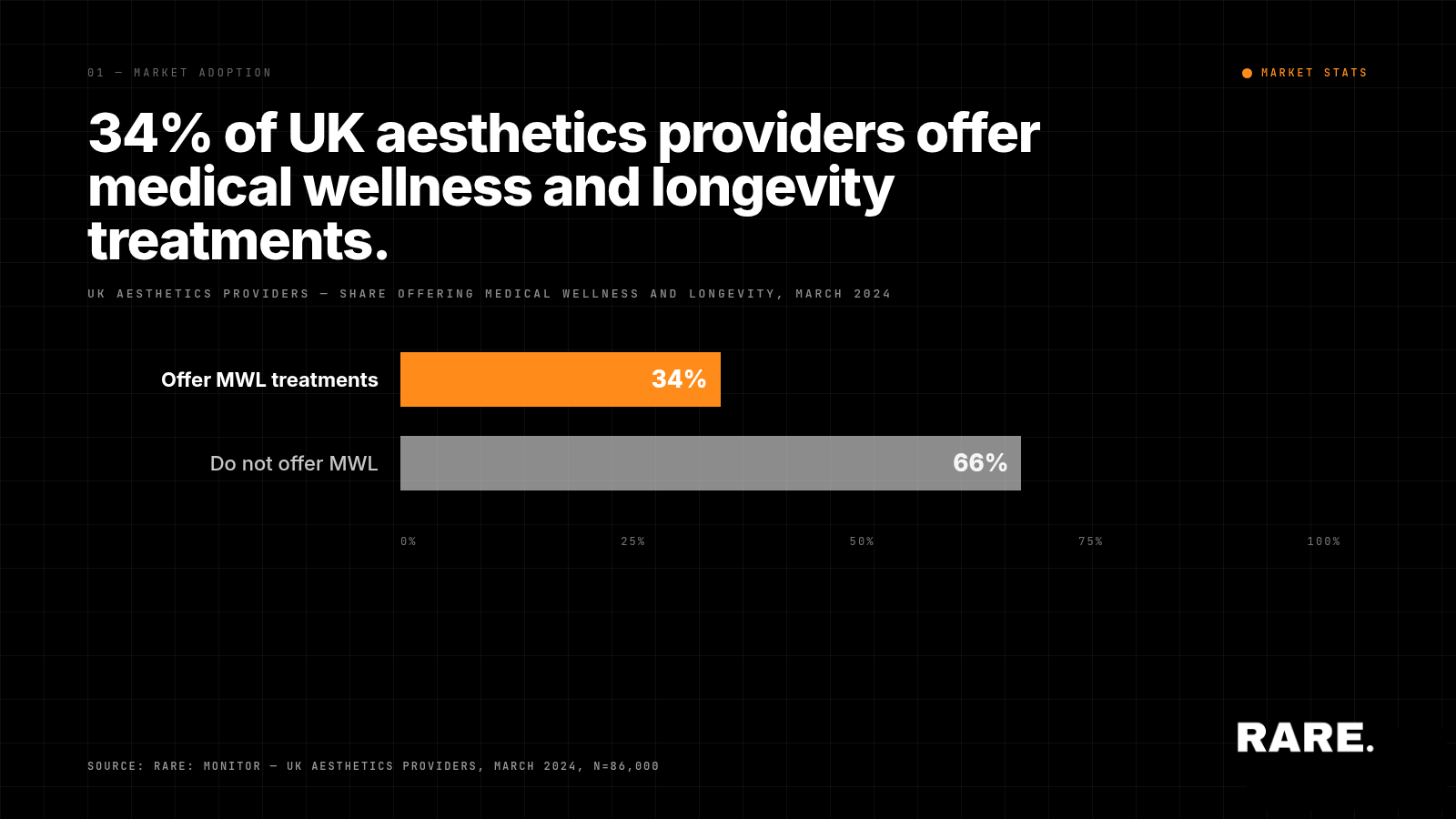

The term ‘wellness’ isn’t a new concept to the healthcare industry, although people used to have a much narrower perspective on what it encompassed. Today, people are much more aware of the benefits of wellness and how this can be incorporated into their everyday lives to enhance their own health.
Medical wellness is the practice of using clinical methods, supplementation, vitamin therapy, medicated weight management, functional medicine assessments, to support long-term health rather than treat acute illness. The World Health Organization defines health as a state of optimal well-being, not merely the absence of disease and infirmity. Medical wellness operationalises that definition.
Why it is growing now
Two factors. The first is post-COVID consumer behaviour. McKinsey research finds 79% of respondents say wellness is important to them and 42% say it is a top priority. The global wellness market is now estimated by McKinsey at over $1.5 trillion. The second is the parallel rise of self-pay aesthetics, which has created a clinic format already accustomed to a paying patient who expects a long-term relationship rather than a one-off treatment.
Medical wellness in the aesthetics clinic
Aesthetic clinics are well placed to expand into medical wellness. They already have a paying patient base, clinical infrastructure, and the right regulatory framework. Rare. research previously found that 70% of women in households with income above £50,000 are interested in a more holistic service from their healthcare provider. Trained aesthetic practitioners, with the right additional training, are the most natural commercial route into that demand.
The treatments that constitute medical wellness in this context are different from spa-style wellness. They include medical-grade supplementation, vitamin injections, IV nutrition therapy, functional medicine assessments, and, where clinically appropriate, medicated weight management. The clinical thread running through them is that they are evidence-based interventions, prescribed and monitored, rather than relaxation services.
Who buys it
The patient profile is older, higher income, and more likely to be already a regular consumer of aesthetic services. Patients buying medical wellness are paying for outcomes that take six to twelve months to materialise, which represents a different commercial relationship from the immediate satisfaction of a single aesthetic treatment.
What this means for clinics
The clinics that move first into medical wellness build a longer customer lifetime value than those that stay focused on single-procedure aesthetics. The patient who arrives for botulinum toxin and stays for a twelve-month wellness plan is worth several times the patient who arrives for botulinum toxin and books their next appointment four months later. The capability investment, training, supplements supply chain, and a clinical protocol for assessment and follow-up, is meaningful but recoverable within the first year of operating the service.
Medical wellness is not a quick-fix add-on. It is a commercial commitment to a different kind of patient relationship.