
Medical wellness is becoming a growing trend that many aesthetics clinics are beginning to embrace, allowing them to offer a holistic approach to the health of their patients. Medical wellness focuses on long-term health, looking at how the internal affects the external, providing a huge opportunity for medical aesthetic clinics.
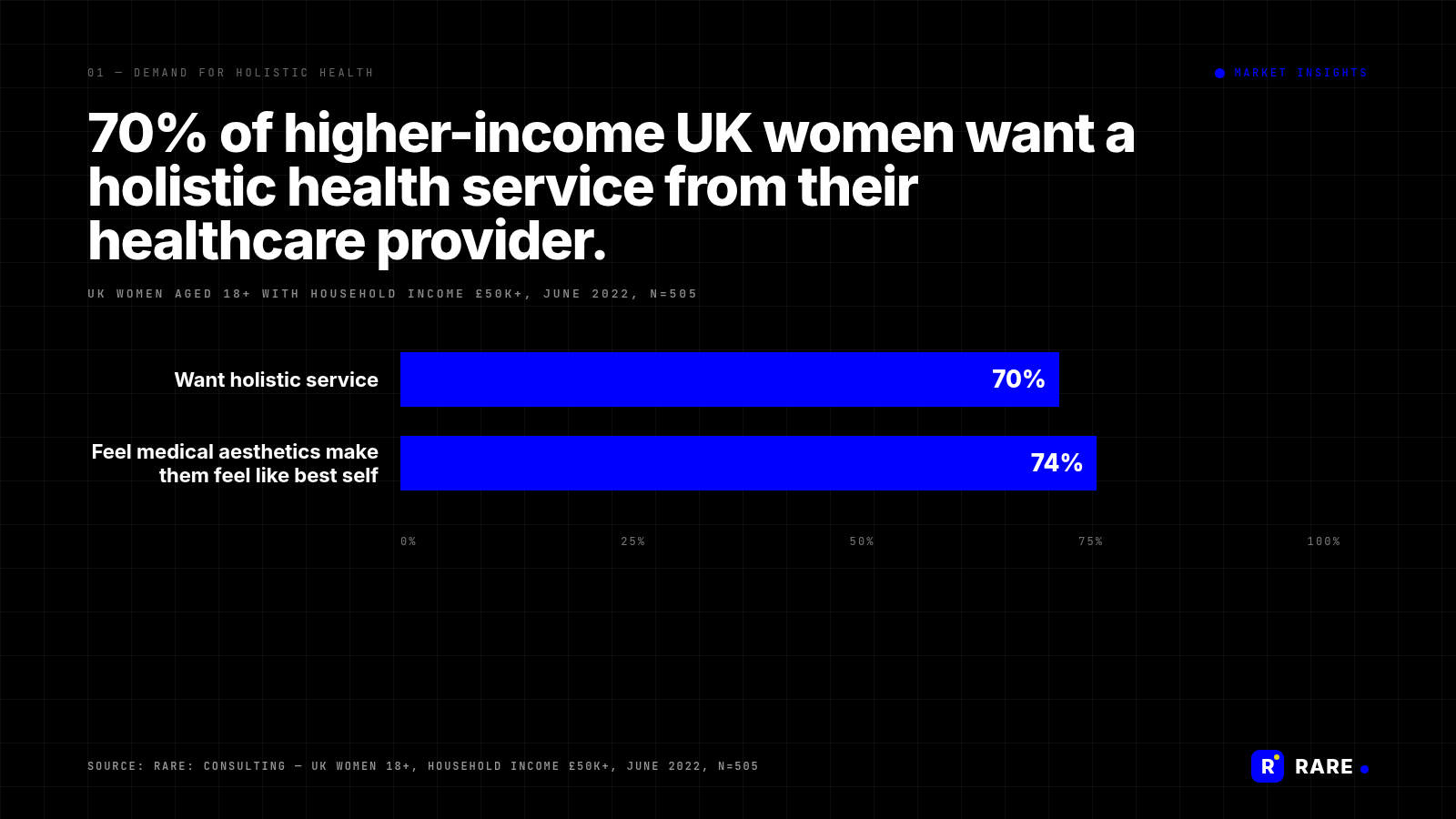
70% of higher-income UK women would consider a holistic health service from their healthcare provider, and 9 in 10 are already actively interested in managing their own health, according to Rare. research from June 2022 across 505 women aged 18+ with household income above £50,000. Medical wellness has shifted from a fringe service into a near-universal consumer expectation among the audience UK aesthetic clinics most want to retain.
Why are UK aesthetic clinics moving into medical wellness?
Demand for holistic health services is no longer optional positioning, it is the baseline expectation among the higher-income consumer cohort. 70% of UK women with household income above £50,000 say they would be interested in a more holistic service from their healthcare provider. 74% of women who have had aesthetic treatment agree that medical aesthetics make them feel like their best self. Wellness and aesthetics are now interpreted by consumers as the same broader category.
For clinics, this is the structural reason to expand into wellness. Aesthetic clinics that treat appearance and ignore underlying health are now competing against clinics that treat both. The latter retain patients longer and command higher annual revenue per patient.
How engaged are UK women with their own health?
Health engagement among the higher-income UK female audience is unusually high. 90% of UK women with HHI £50k+ say they are interested in actively managing their own health. 58% feel they can influence their current health outcomes. 57% feel there is more they can do to improve their health than they are doing today.
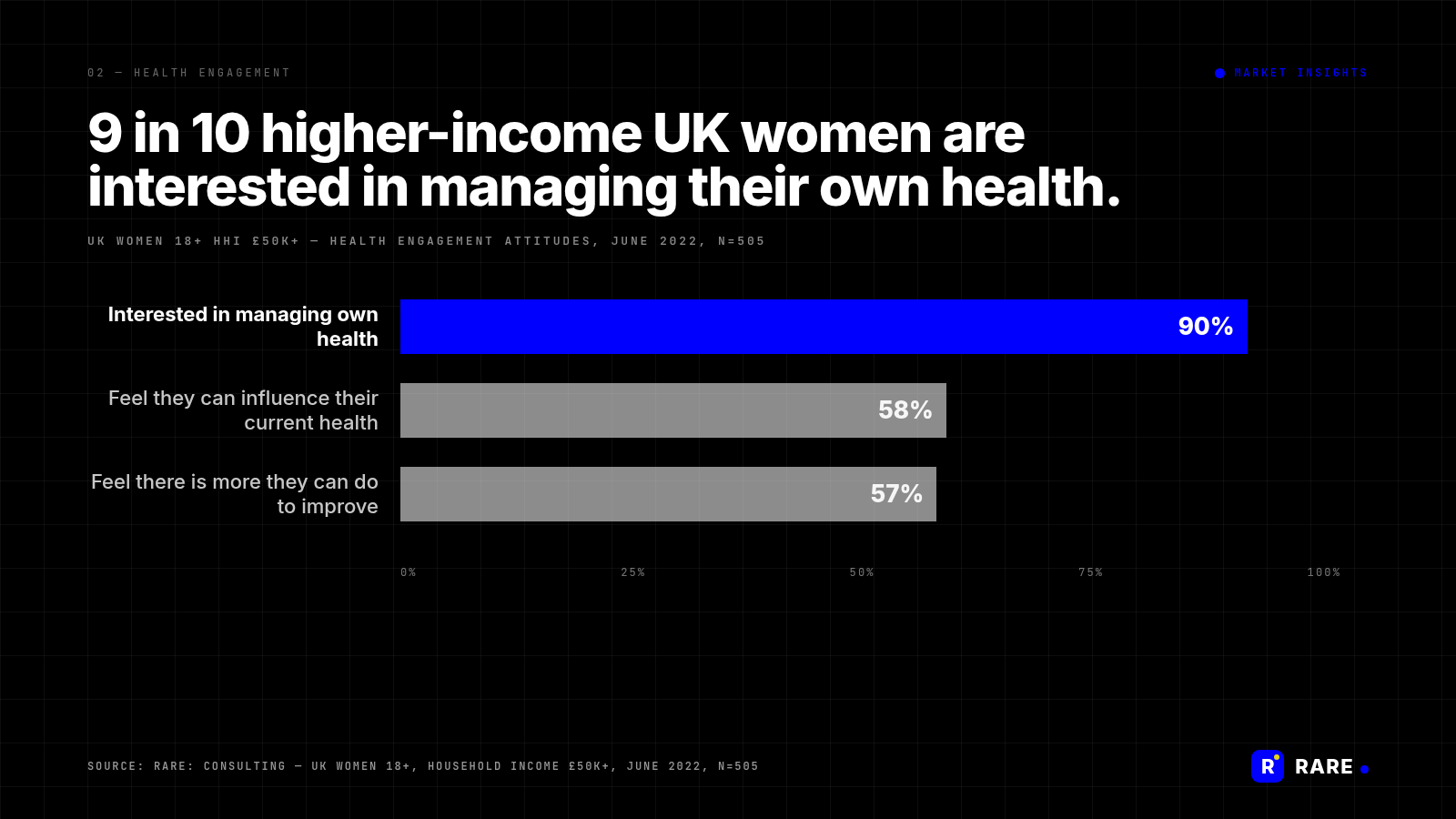
This active engagement is a commercial opportunity. The audience is already paying attention. The clinics, manufacturers and brands that step into the space with credible, structured wellness programmes will reach an audience that is already looking for them.
What kind of wellness support do UK women want?
Preferences for weight management support vary sharply by age, suggesting that medical wellness offerings need to be segmented carefully. 49% of UK women aged 18-25 see a personal trainer as the ideal route to manage weight. 38% of 25-32 year olds prefer apps. 28% of 41-50 year olds say a medical aesthetic and wellness practitioner is the ideal support. 59% of women aged 55+ choose a dietician.
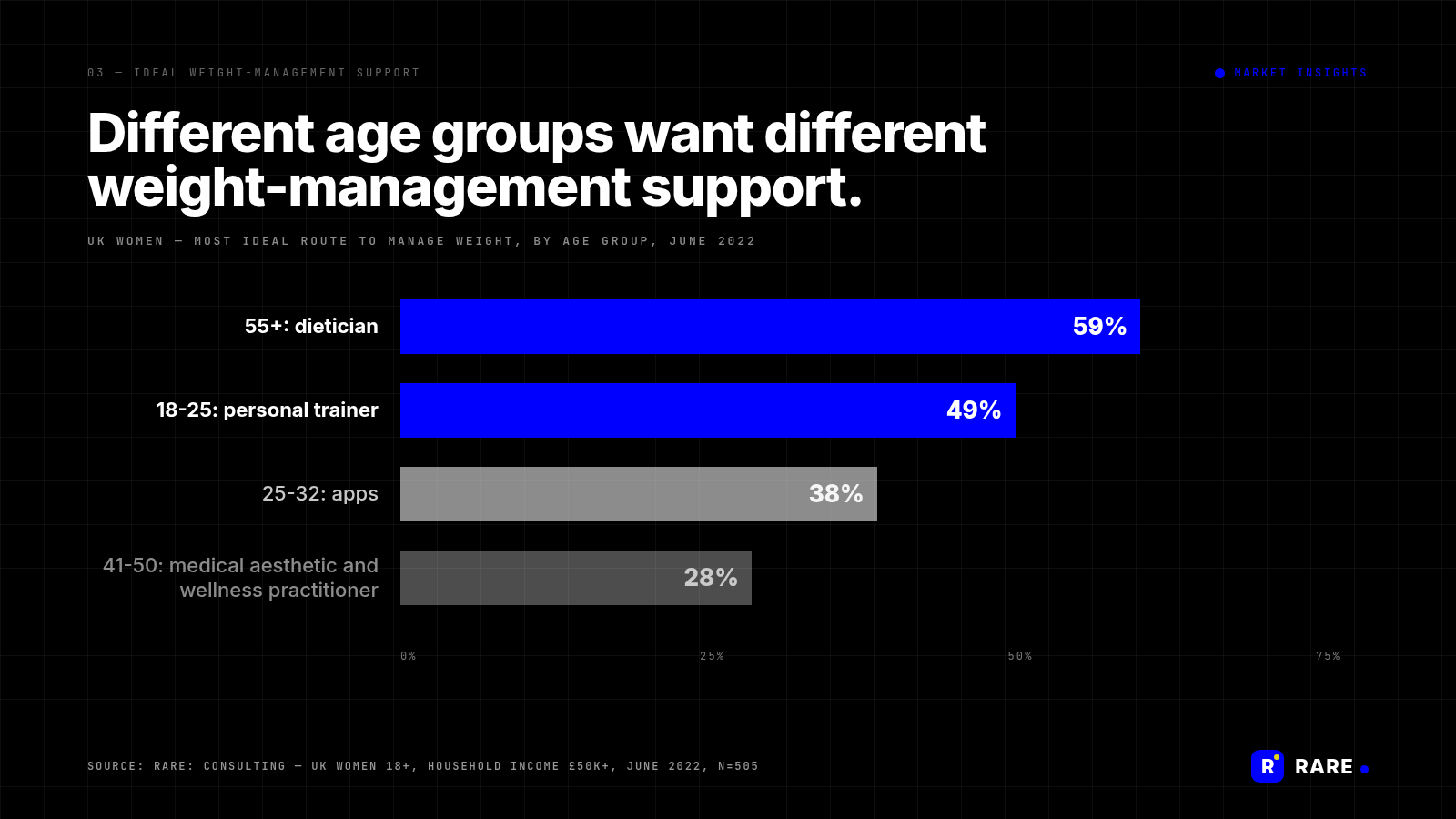
For aesthetic clinics, the practical takeaway is that holistic offerings should be tailored to the patient cohort. A wellness programme designed for 18-25 year olds (PT, lifestyle coaching, app-based tracking) will not land with 55+ patients (dietician-led nutrition, structured medical follow-up). Clinics need bespoke pathways, not single packages.
The competitive separation that medical wellness offers comes from clinical credibility, not service breadth. UK aesthetic clinics already hold the practitioner relationship and the trust signal that beauty salons and spas cannot match. Adding wellness offerings, whether through cross-referrals to dieticians and personal trainers, structured nutrition programmes, or medicated weight management, builds on that existing relationship rather than competing with it.
The clinics that move first will define what UK consumers expect medical wellness to look like. The clinics that wait will compete for share against incumbents who already own the consumer relationship. Six months from now, the gap between the early-adopter clinic and the wait-and-see clinic will be measurable in retention, average annual spend per patient, and pricing power. The data is consistent enough to make the timing question the central one.
Source: Rare., UK women aged 18+ with household income £50k+, June 2022, n=505.