
Laser Hair Removal is now more popular than Botulinum Toxin in the UK. Is it time for clinics to re-appraise their offering?
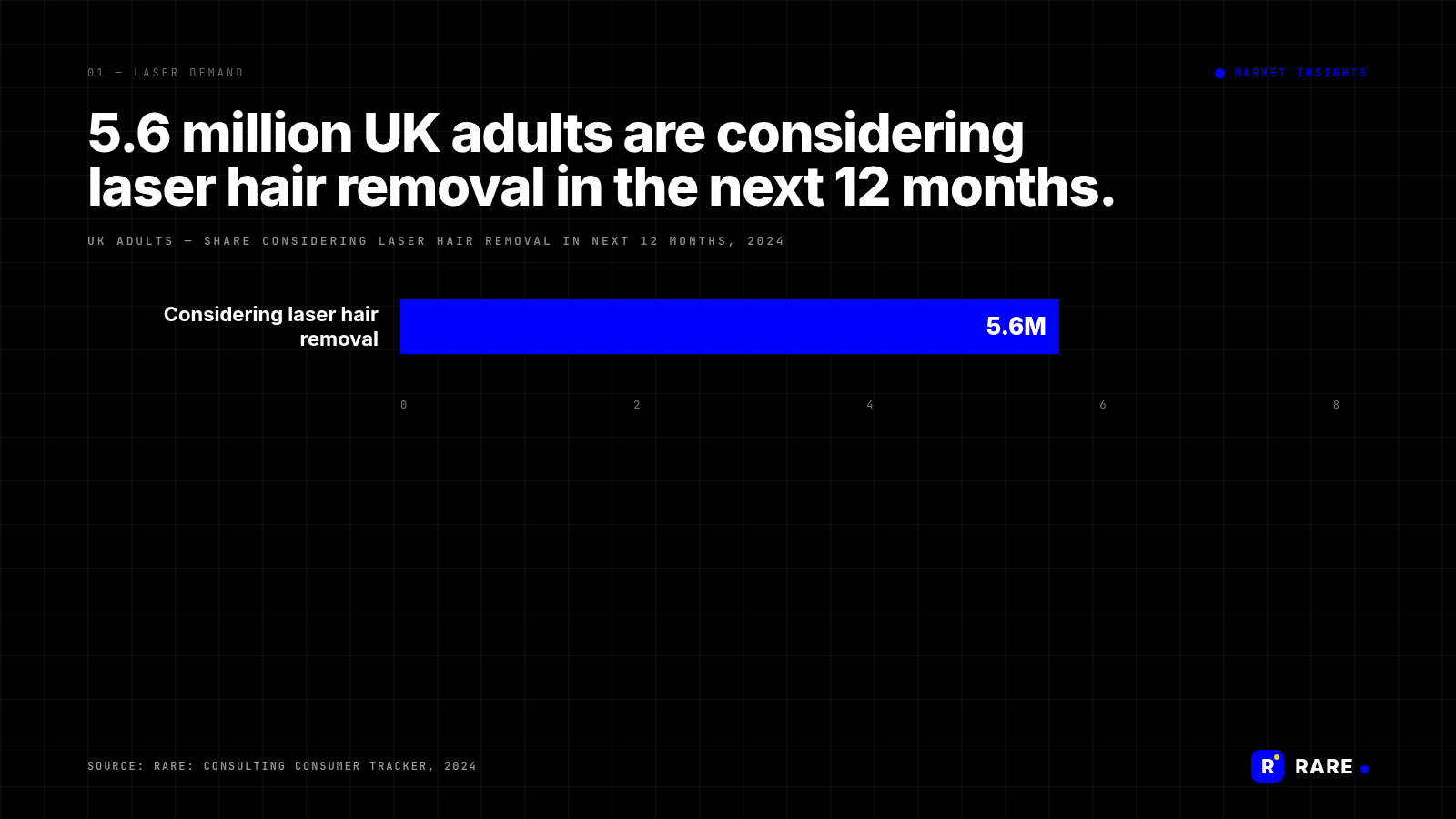
Laser hair removal is now the most considered aesthetic treatment in the UK, with 5.6 million UK adults planning to receive it in the next 12 months, according to Rare. tracker data. The category has overtaken botulinum toxin and dermal fillers for the first time since 2020, against a backdrop of declining consumer interest in those two injectable categories. UK aesthetic providers and manufacturers reading this signal correctly will treat it as a category-realignment, not a temporary spike.
Why is laser hair removal moving up the leaderboard?
Several converging forces. Botulinum toxin and dermal filler interest fell 16% and 31% respectively over the past 12 months, leaving consumer attention available for adjacent categories. Cost-of-entry on laser equipment has fallen as more device manufacturers entered the UK market. The at-home IPL category has expanded the consumer-awareness baseline. Male aesthetic engagement is also growing, and male laser hair removal demand is a meaningful share of the new volume.
None of these forces alone explain the move. The combination is what sets laser hair removal apart. Each adjacent shift removed a small barrier, and the cumulative effect is a category that has crossed from mid-tier consumer interest to the top of the UK aesthetic consideration ranking.
Is UK supply keeping pace with laser hair removal demand?
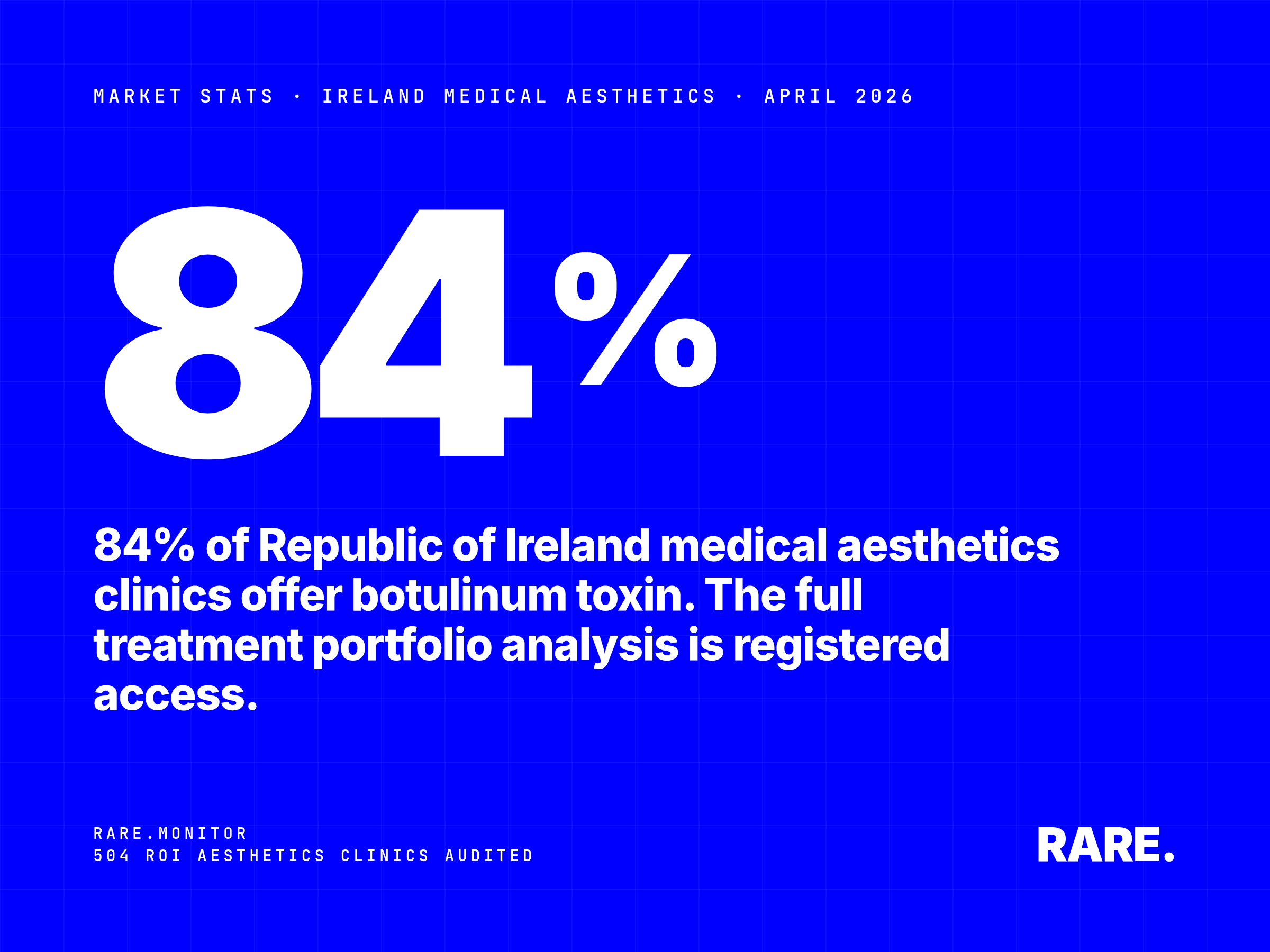
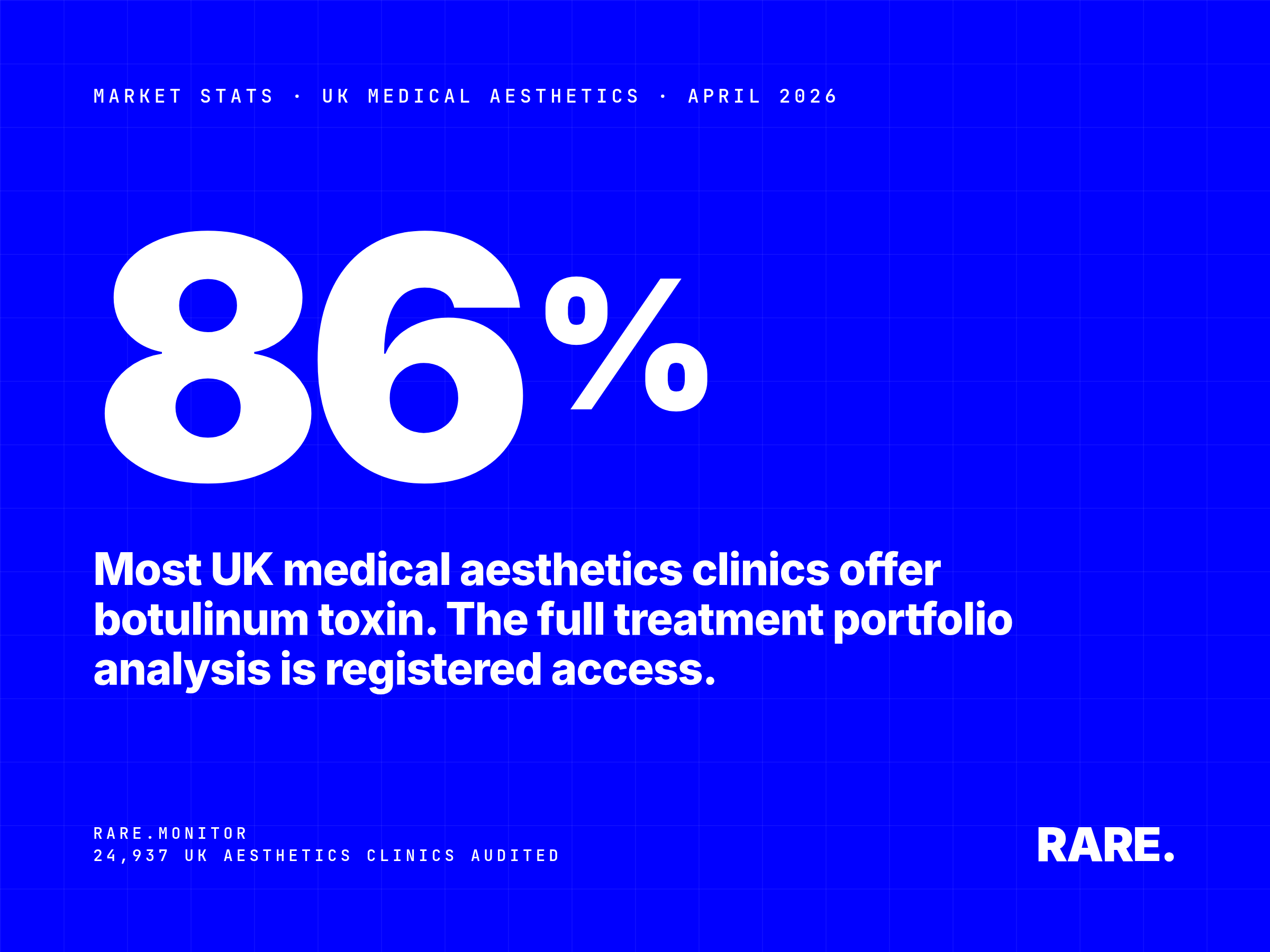
Not quite. 38% of UK aesthetic providers offer laser hair removal or IPL. The treatment is the most popular consumer demand category and only the fourth most commonly offered provider category, behind botulinum toxin, dermal filler and skin boosters.
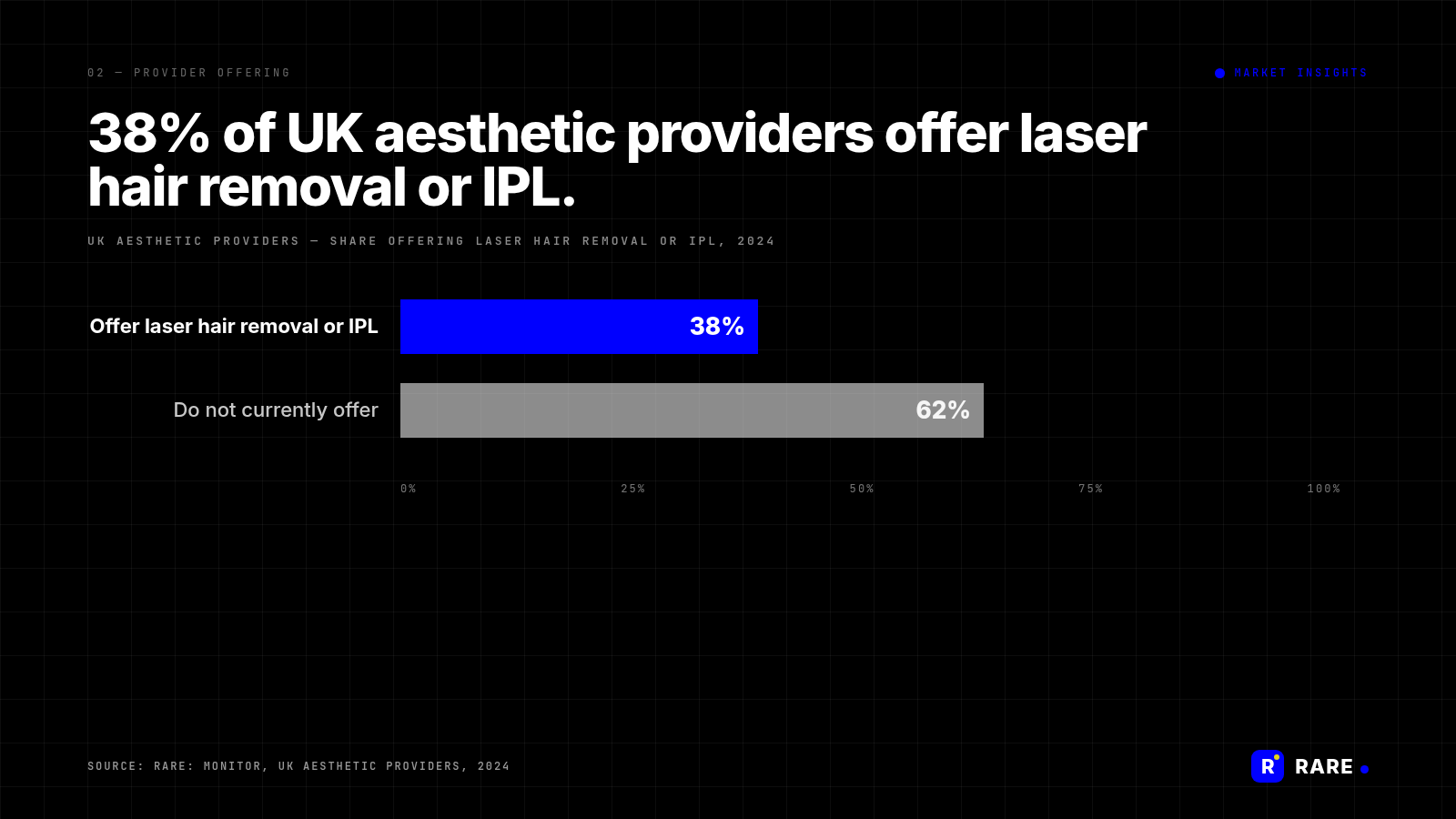
That mismatch creates a clear commercial opening. Providers that add laser hair removal to a service mix that already includes the standard injectable categories can capture demand that is currently going unmet by their direct competitors. The cautionary note is that scale-led laser-only models can be hard to sustain. Elan Laser Clinics went into UK administration earlier in the same period, citing weaker-than-expected demand and high operational costs. Laser hair removal works as part of a broader service mix more reliably than as a standalone clinic model.
On the consumer side, the addressable demographic for UK laser hair removal sits in a useful spending bracket. Core consumer income is £20,000 to £60,000 a year, with patients prepared to spend between £100 and £300 on treatment annually. That brings the category into the affordability range of a wider UK consumer base than premium injectables typically reach, which goes some way to explain how laser hair removal climbed past botulinum toxin in consumer consideration.
Source: Rare. consumer tracker and Rare.Monitor, presented at ACE Conference on behalf of Alma Lasers, 2024.