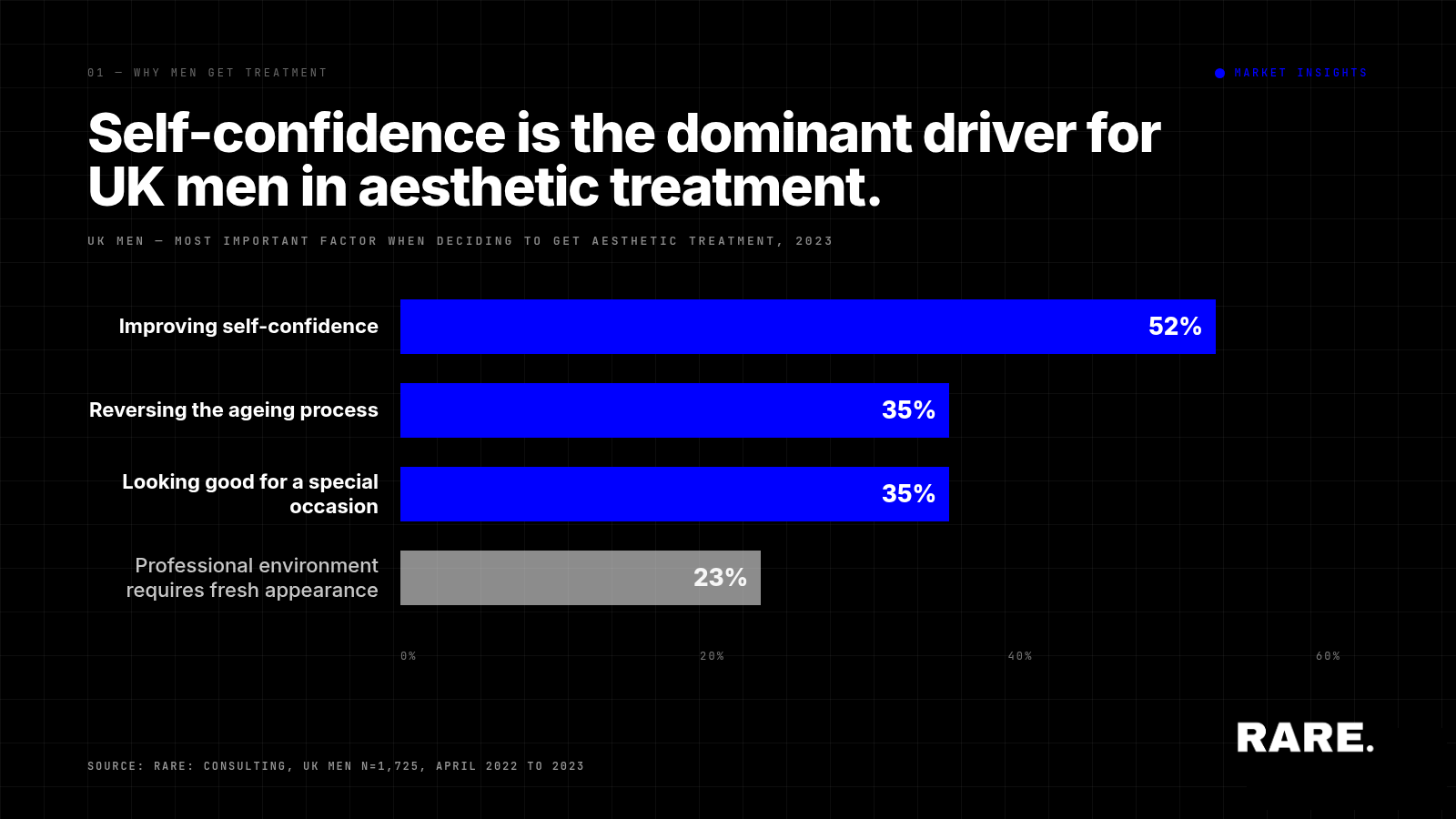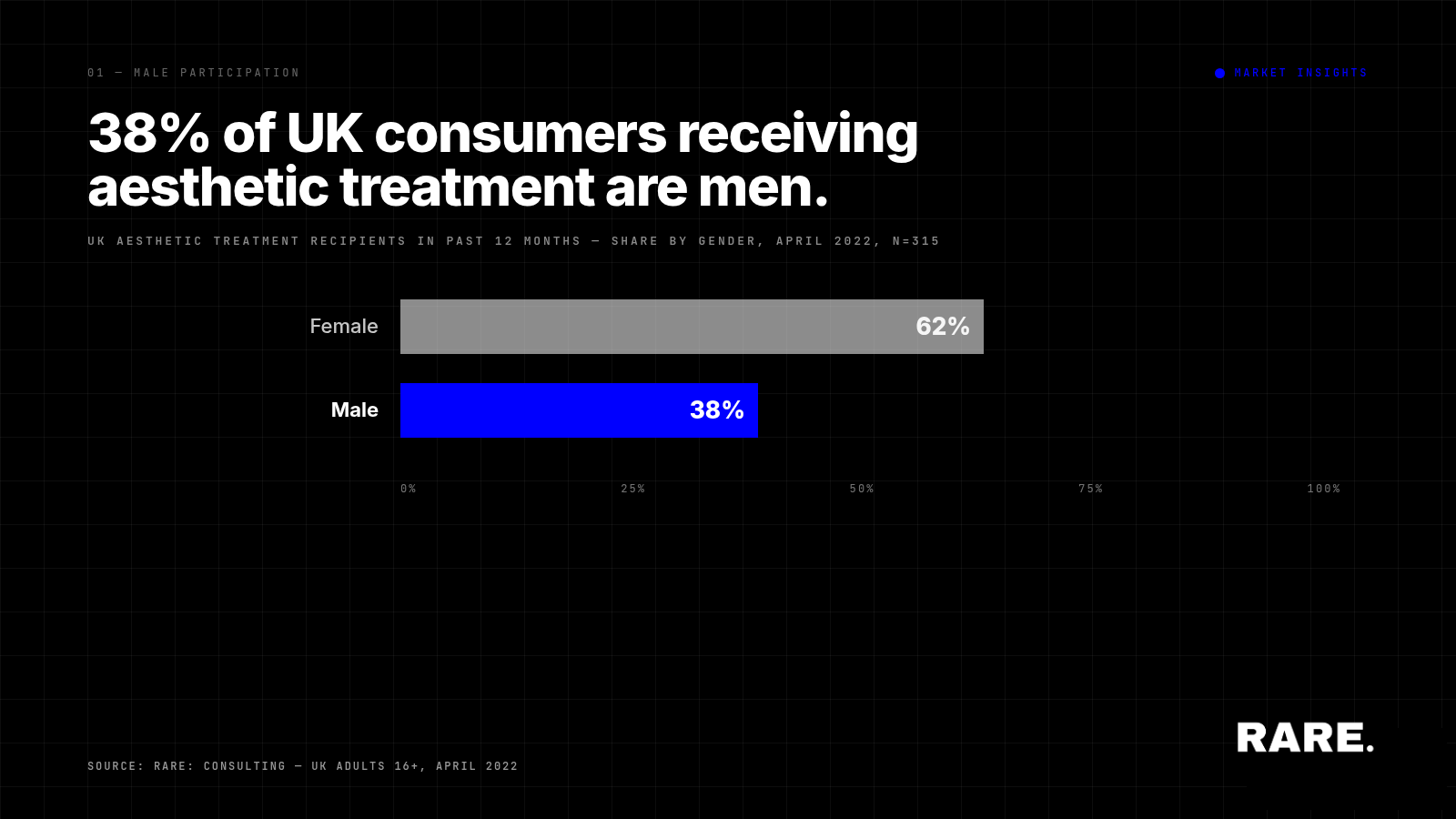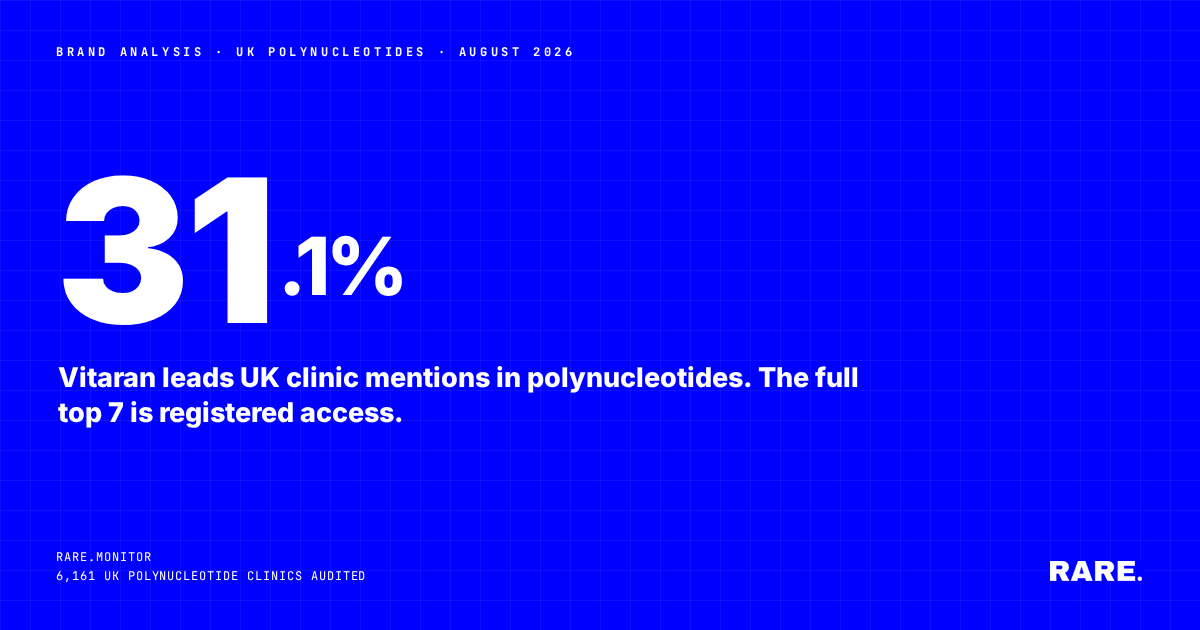

In the UK, 1 in 4 people experience mental illness each year. With only 36% of referrals for psychological therapies being for men, it’s important to understand not only the gender disparity in accessing healthcare for mental health issues but what could be influencing mental illness in the first place so that interventions can be put in place by healthcare providers.
One in four people in the UK experience mental illness each year. Only 36% of referrals to psychological therapies are for men. The gap is not new and not improving fast. New Rare. research suggests one of the levers that could move it is appearance.
Rare. surveyed 1,744 men in the UK and found one in eight reports depression or anxiety. One in five reports a negative attitude towards their own appearance. One in five rates their mental wellbeing as poor. The overlap between the three is the part that interests us. Men who report a negative view of their appearance are materially more likely to also report poor mental wellbeing, suggesting the two are not independent but causally linked.
What is driving the link?
46% of men in the UK report that what family and friends say about the way they look impacts their attitude towards their own appearance. CALM data finds 35% of men feel unhappy with how they look, and 48% report that this has affected their mental health.
Remote working has added a new pressure point: 49% of men in the UK report that seeing their reflection on video calls or in photographs has affected how they feel about their appearance. The video-call mirror is a daily exposure that did not exist before 2020.
86% of young men report facing body shaming or pressure to look a certain way. 61% feel brands have a responsibility to shape modern masculinity. Both numbers point in the same direction: the audience is asking for representation that looks like them, not aspirational images they cannot reach.
What brands are doing about it
Three campaigns are worth flagging because they sit at the intersection of appearance and mental health rather than treating them as separate territories.
Gymshark opened Deload, a pop-up barbershop, after research suggested men are more likely to talk about mental health and stress with their barbers than with anyone else. The format worked because it co-located a service men were already buying with a conversation they would not otherwise have.
Nivea for Men's Strength in Numbers campaign with Liverpool FC and Talk Club encourages men to talk in groups, with structured prompts on mental fitness and how to open conversations. The framing here matters: the campaign treats mental fitness like physical fitness, something that responds to practice.
ManHealth, a Northumberland and Durham CIC, runs peer-support groups for men and operates as a referral relief valve for the NHS. The model is replicable and the gap it fills, men who would not self-refer to formal services, is large.
What this means for healthcare providers
If 49% of men feel worse about their appearance because of video calls, and one in eight has clinically relevant anxiety or depression, the appearance category is no longer cosmetic. It is a mental health adjacency. Aesthetic clinics, dermatology providers, and primary care should be thinking about how appearance-driven distress presents in their patients and what their referral pathway looks like.
Brands have a responsibility most of them are still working out. The men in this dataset are not asking for aspiration; they are asking for representation that looks like them, conversation prompts that work, and services that meet them where they already are. The campaigns that have worked have all met that brief.