
It’s widely known that the Medical Aesthetics industry is tailored towards women, as the majority of patients looking for treatment are female. However, there has been a shift and growing trend of men seeking medical aesthetic treatments, meaning there is untapped potential in the market for clinics to expand their business.
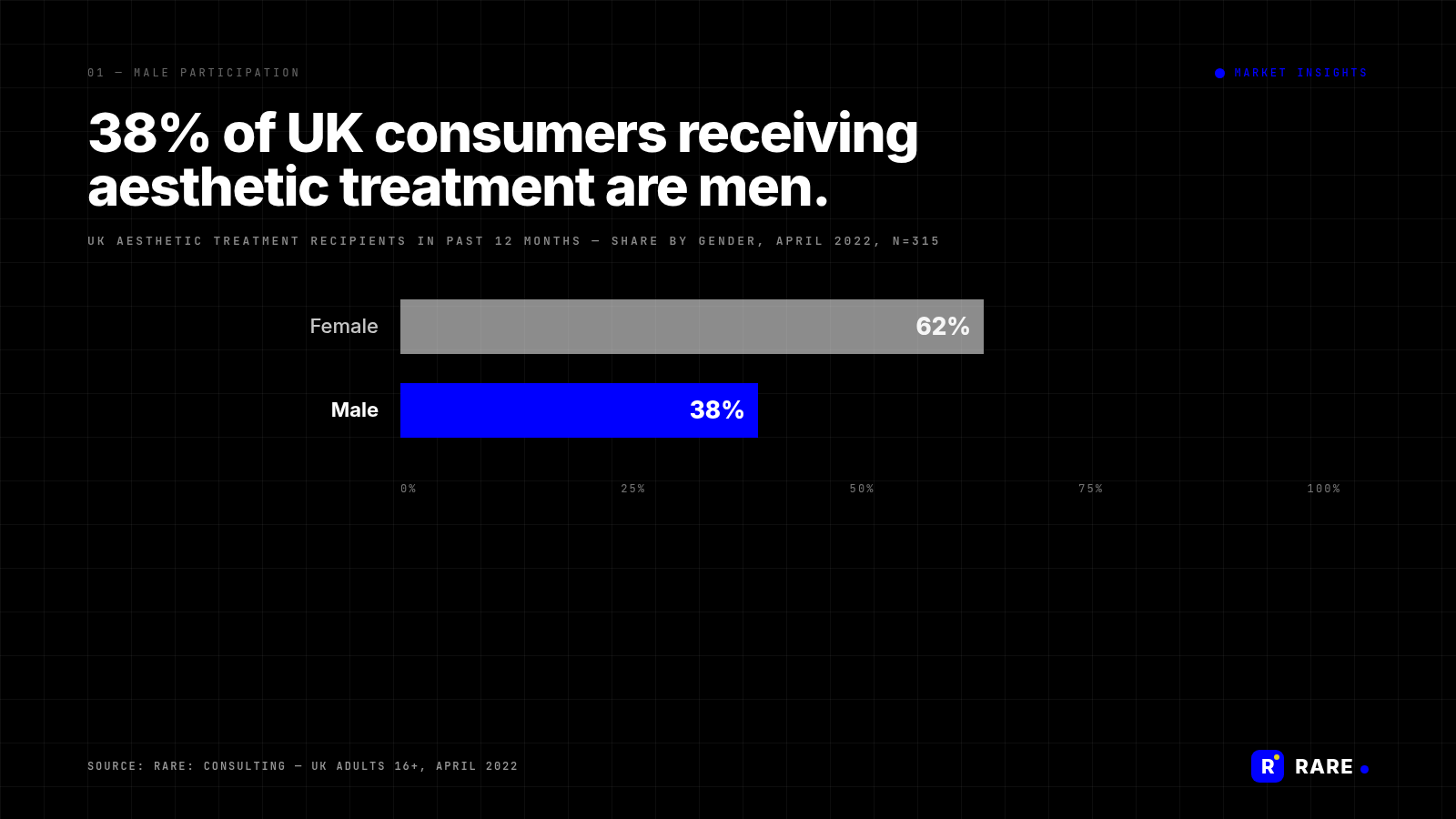
38% of UK consumers receiving aesthetic treatment in the past 12 months are men, and 1 in 3 men are considering treatment in the next 12 months, according to Rare. data from April 2022, n=315. The UK aesthetics industry has historically been built around female consumers, but male participation is now significant enough to require segmented commercial strategy. The data below sets out where male demand is strongest, what drives it, and what holds it back.
How big is the male UK aesthetic treatment audience?
Male participation has crossed the threshold where it can no longer be treated as a niche segment. 38% of UK consumers who received aesthetic treatment in the past 12 months are men. A further 1 in 3 UK men are considering treatment in the next 12 months.
Social media has driven male engagement faster than the industry has adjusted. Around a third of younger UK men report that they are actively trying to change their appearance to conform to current cultural and visual norms. The implication for clinics, manufacturers and brands is that the addressable male audience is sized for dedicated commercial focus, not a footnote in a female-targeted programme.
Which aesthetic treatments do UK men have?
Male treatment preferences differ from female preferences in clinically meaningful ways. 1 in 4 UK men receiving aesthetic treatment in the past 12 months had medicated weight management. 1 in 5 had botulinum toxin (the procedure that has earned the colloquial term Brotox). A further 1 in 5 had vitamin injections, reflecting the broader male interest in holistic health alongside appearance.
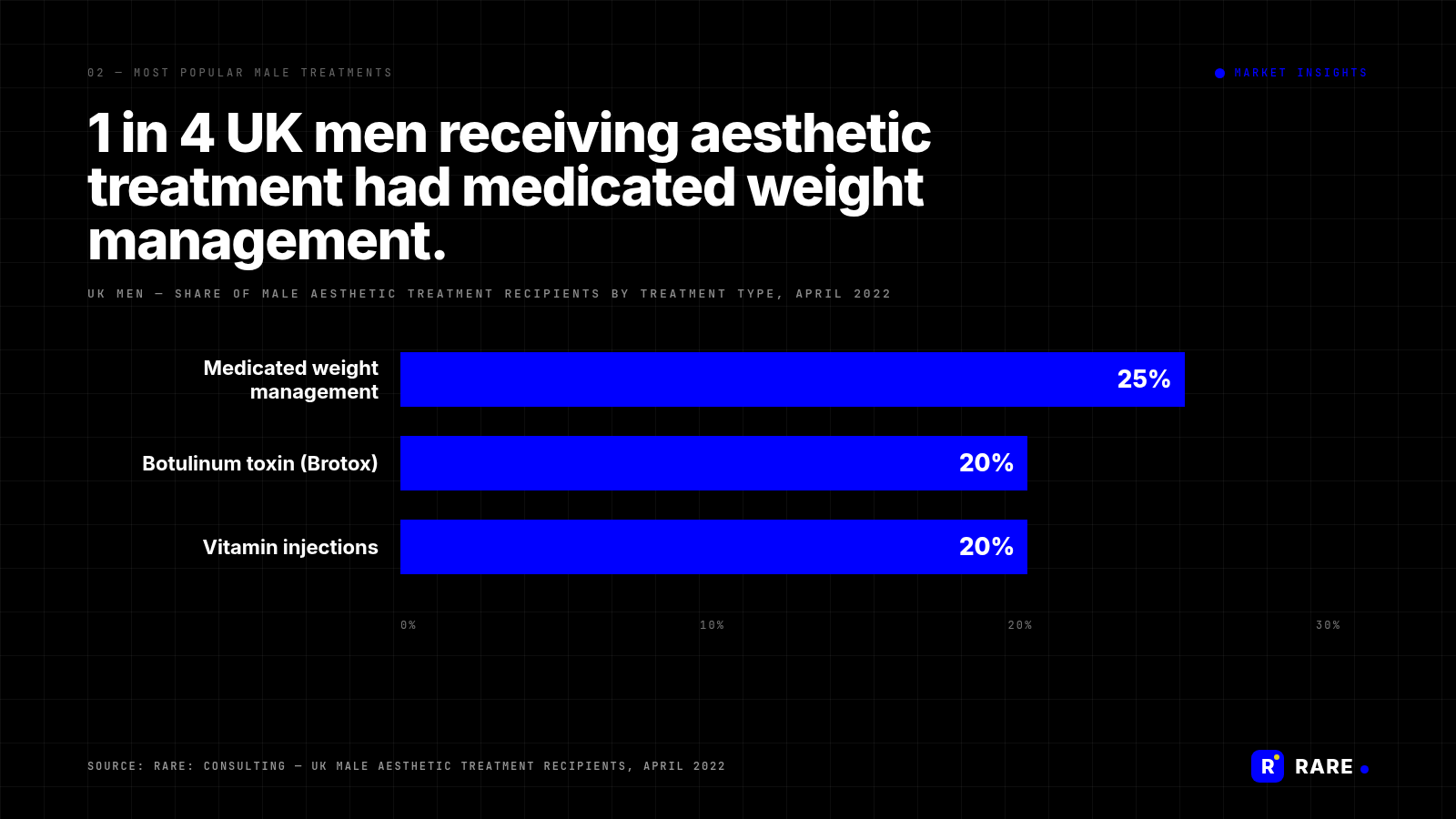
This is a treatment mix that prioritises function alongside appearance. Medicated weight management and vitamin injections both address health outcomes that men are increasingly prioritising, and the fact that they sit alongside botulinum toxin in the male treatment basket signals that male aesthetic engagement is partly an extension of broader health-led behaviour.
What drives men into aesthetic treatment, and what holds them back?
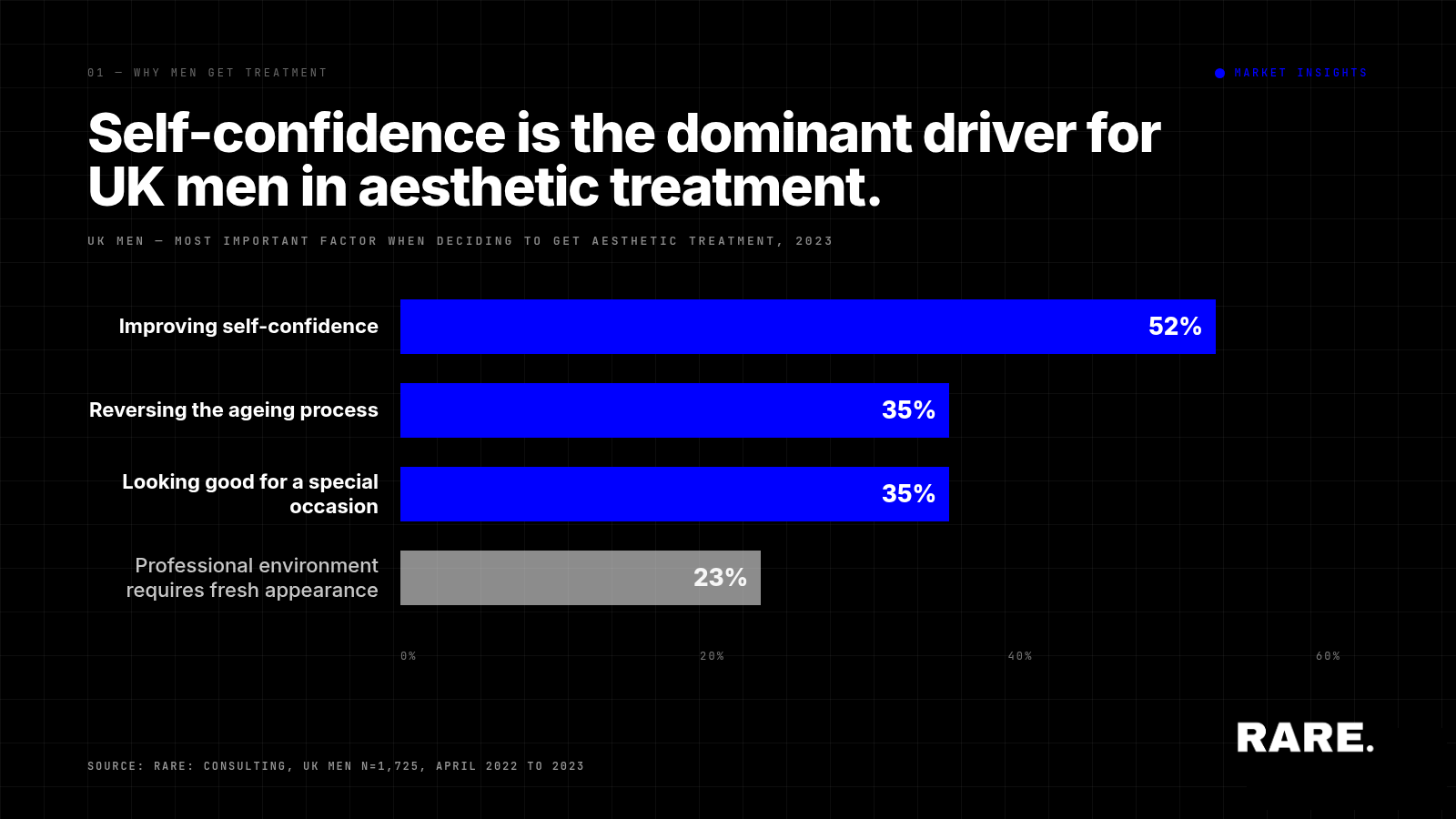
Self-confidence is the dominant driver. Almost 1 in 2 UK men (50%) report that improving self-confidence is the most important factor in their decision to undergo aesthetic treatment. The feel-good outcome that the female audience has long valued is now equally important to the male audience.
Barriers cluster around safety and product quality. 76% of UK men say concerns over the quality of products used during treatment would prevent them from going ahead. 75% cite concerns over the safety of the procedure itself.
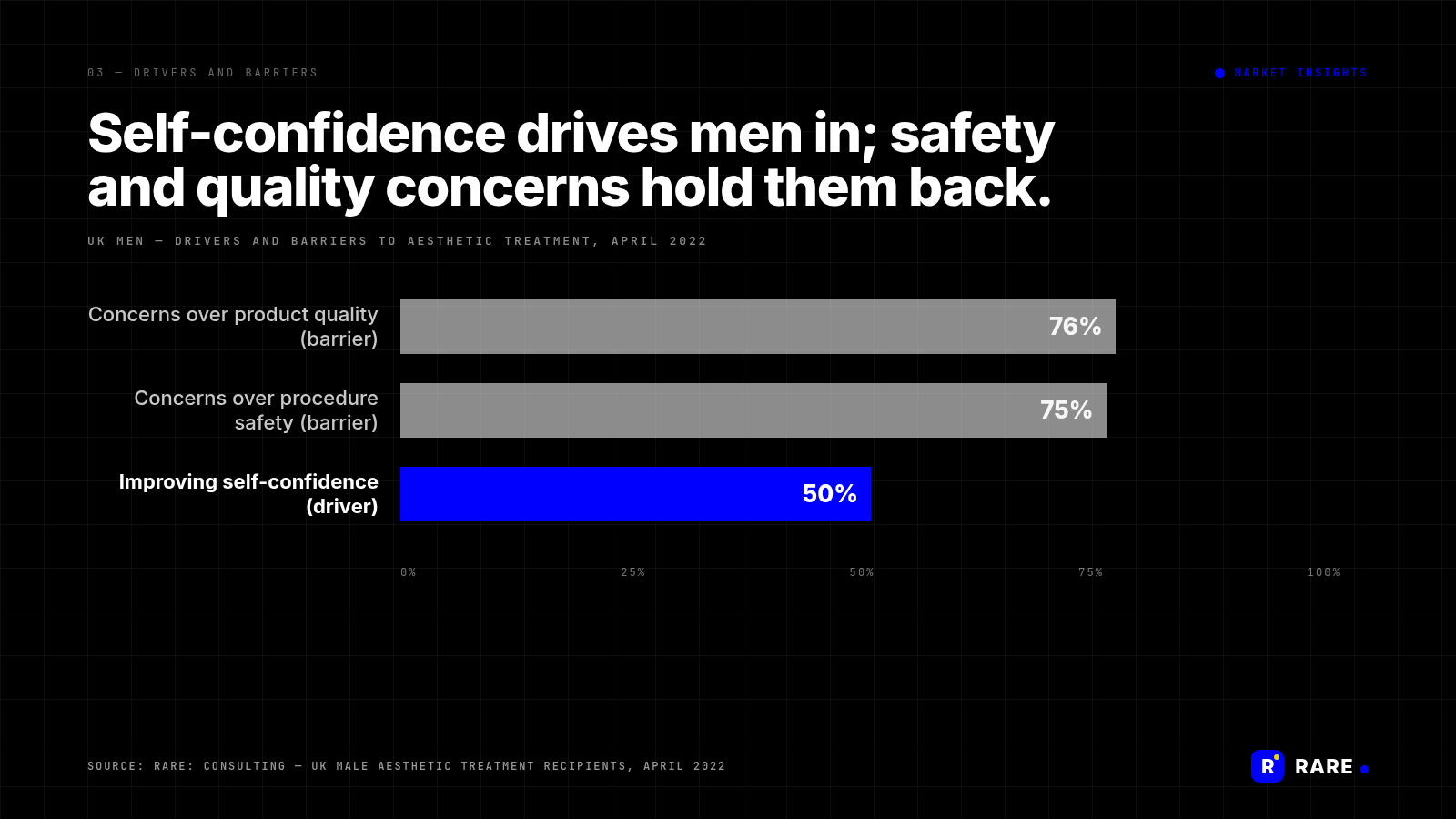
For clinics, the practical implication is that male conversion turns on visible safety and quality signals. Regulatory body registration, medically qualified practitioner credentials, and clear separation from non-medical providers are not nice-to-haves, they are structural barriers to male conversion when missing.
UK male conversion turns on safety and quality signals more than on consumer-facing aesthetic marketing. Three-quarters of UK men cite product quality concerns or procedure safety concerns as a barrier. That is structurally higher than the female barrier profile in the same data, and it changes what good commercial positioning looks like for the male audience.
The clinics and brands most likely to convert UK men are not necessarily the ones with the strongest aesthetic positioning. They are the ones with the most visible regulatory body memberships, the clearest medically-qualified-practitioner credentials, and the most prominent separation from non-clinical providers. Those signals read as commercial detail to most aesthetic brand teams. To the male customer, they are the deciding factor.
Source: Rare., UK adults 16+, n=3,578, April 2022.