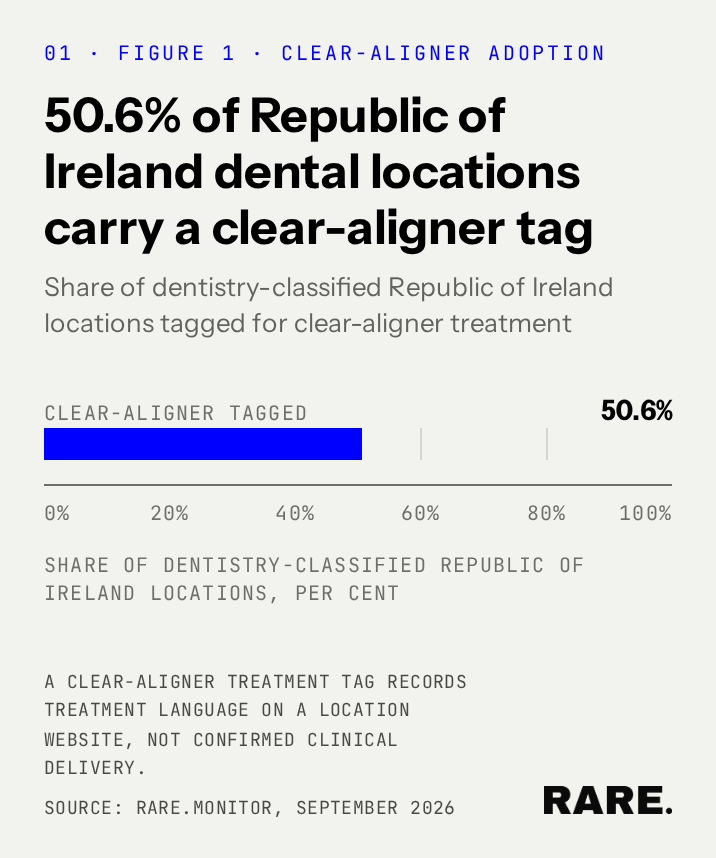
50.6% of dentistry-classified locations in the Republic of Ireland carry a clear-aligner treatment tag. Within that published category, Invisalign is named on 72.2% of the narrower clear-aligner group. This is a website-naming rate, not market share or confirmed clinical delivery.
The adoption figure uses all dentistry-classified Republic of Ireland locations as its base. Every supporting figure uses the narrower group of clear-aligner-tagged locations. For comparison, see theUK clear-aligner analysis.
Clear-aligner tags appear at just over half of dental locations
The 50.6% finding shows clear-aligner language is already common across Republic of Ireland dental websites. It gives category teams a national benchmark for published treatment positioning, but not proof that every tagged location delivers the service clinically.

Commercial implication: Treat clear aligners as an established published category in Republic of Ireland dentistry. Use the national benchmark to test visibility and positioning, not to infer treatment volumes or confirmed clinical delivery.
Invisalign is named on 72.2% of tagged locations
Invisalign is named on 72.2% of locations in the narrower clear-aligner group. We track no second aligner brand for comparison, so this is a website-naming rate rather than market share or evidence of treatment delivery.
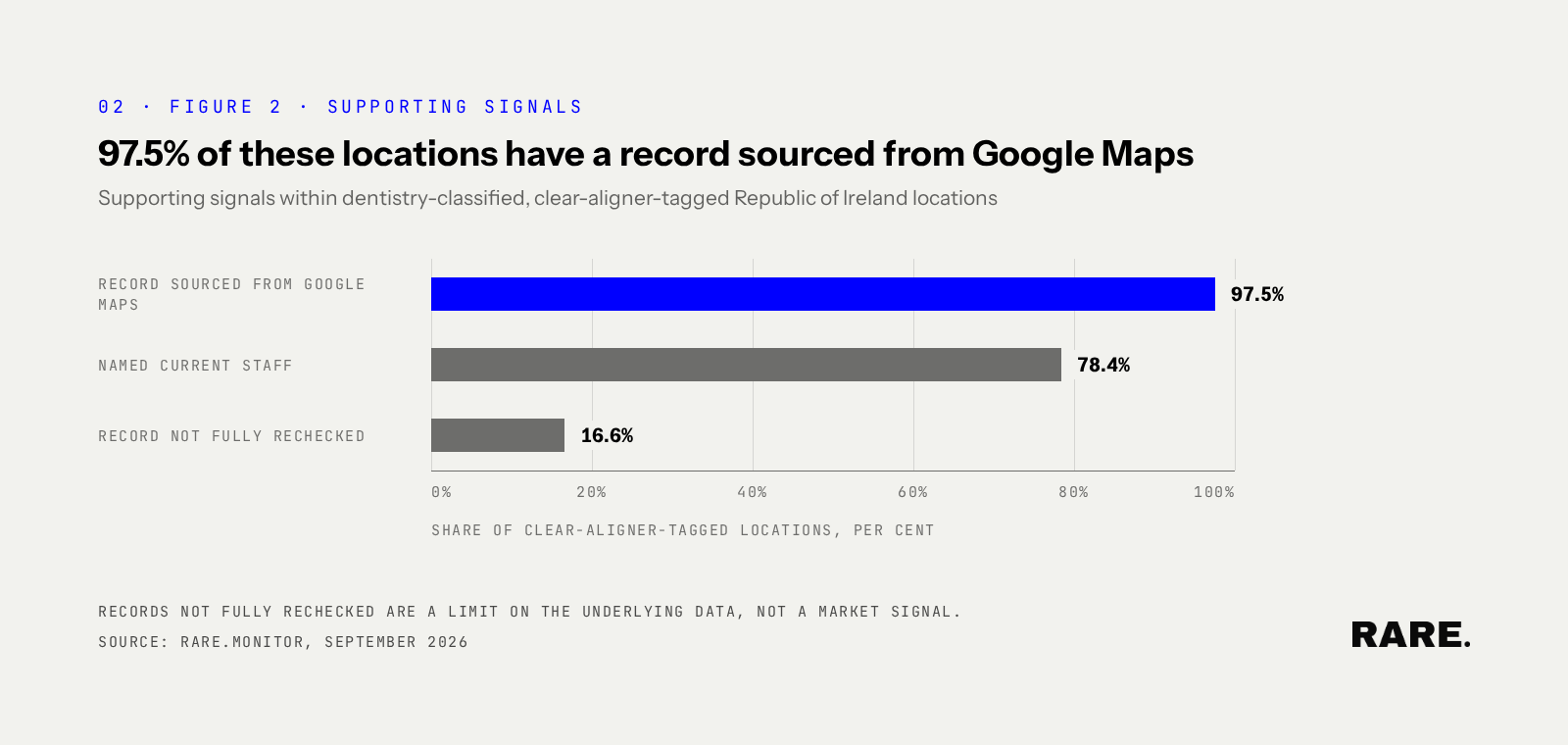
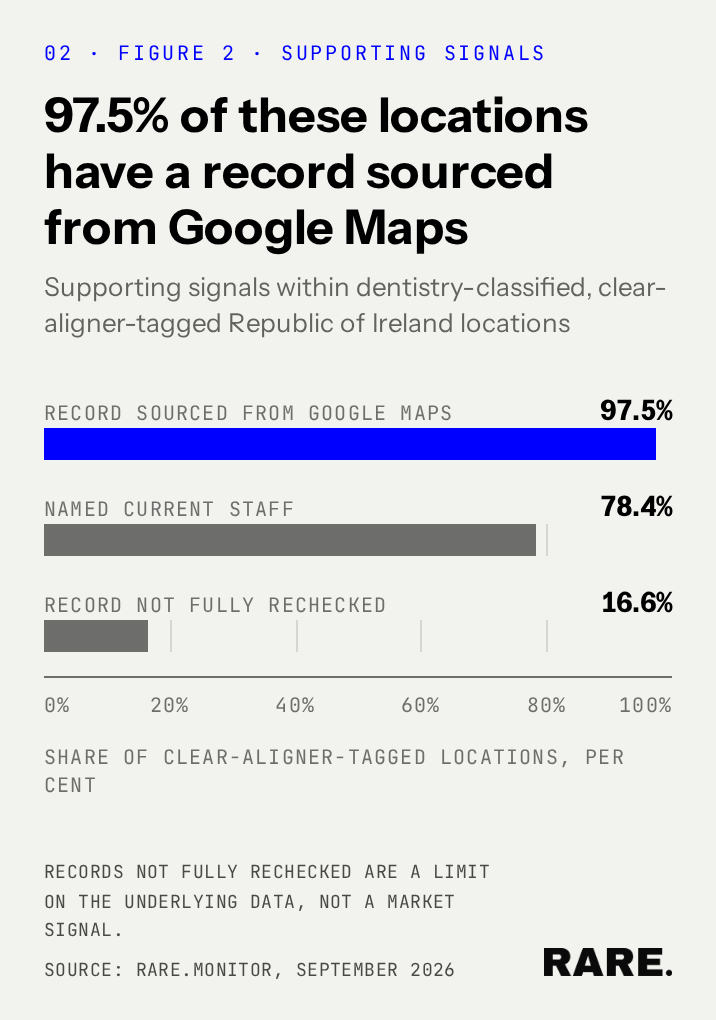
A named current-staff healthcare professional is recorded at 78.4% of locations in this group. Treatment information is incomplete at 16.6%. These signals add context, but neither confirms that a tagged service is currently delivered.
The source base sets a firm limit on the conclusion
Google Maps-derived records account for 97.5% of the narrower group. The remaining records come from other sources, including thePharmaceutical Society of Ireland. None comes from the Health Information and Quality Authority, so the data does not support a regulator-confirmed majority claim.
The clear-aligner label comes from wording on each provider's own website. It is a published treatment tag, not a regulator-confirmed clinical service.
The 50.6% benchmark gives commercial teams a baseline for comparing the visibility of their own clear-aligner offer across Republic of Ireland dentistry. They can use it to spot where published positioning falls behind the market, but not to infer treatment volumes or confirmed clinical delivery.
Frequently asked questions
The questions below set out what the September 2026 snapshot measures, what it does not confirm, how Invisalign appears in the data and how far the source mix supports the conclusions. Each answer uses the same figures and caveats as the analysis above.
What percentage of dental locations in the Republic of Ireland name clear aligners?
50.6% of dentistry-classified Republic of Ireland locations carried a clear-aligner treatment tag as of 9 September 2026. The tag records published website wording, not confirmed clinical delivery. Source: Rare.Monitor, September 2026.
Does the clear-aligner tag confirm that a provider delivers the treatment?
No. The clear-aligner label comes from treatment wording on a provider's website. It is not a confirmed clinical service and does not come from a regulator feed. Source: Rare.Monitor, September 2026.
What percentage of locations name Invisalign?
Invisalign is named on 72.2% of dentistry-classified, clear-aligner-tagged Republic of Ireland locations in September 2026. This is a website-naming rate, not market share or confirmed use; we track no second aligner brand for comparison.
How strong is the Republic of Ireland source base?
Google Maps-derived records account for 97.5% of the narrower group. The remaining records come from other sources, including the Pharmaceutical Society of Ireland; none comes from the Health Information and Quality Authority. Source: Rare.Monitor, September 2026.
Methodology: Private-market analysis using Rare.Monitor provider data. A clear-aligner tag records treatment language on a location website, not confirmed clinical delivery. The adoption figure uses all dentistry-classified Republic of Ireland locations; supporting figures use the narrower clear-aligner-tagged group. Source: Rare.Monitor, September 2026.